EN
EN
Magnetic Lash Set Packaging: The 2026 OEM Guide to Private Label Window Boxes
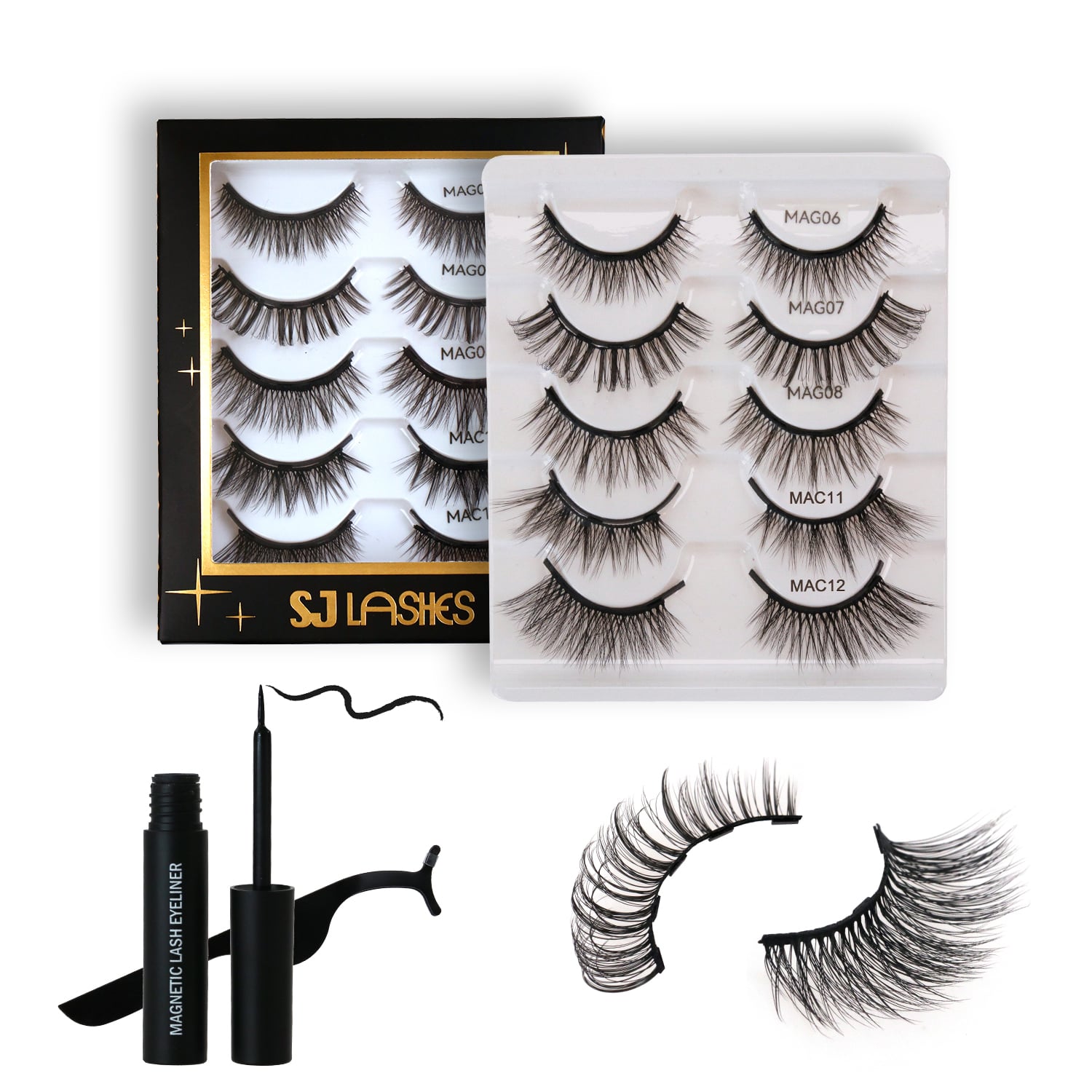
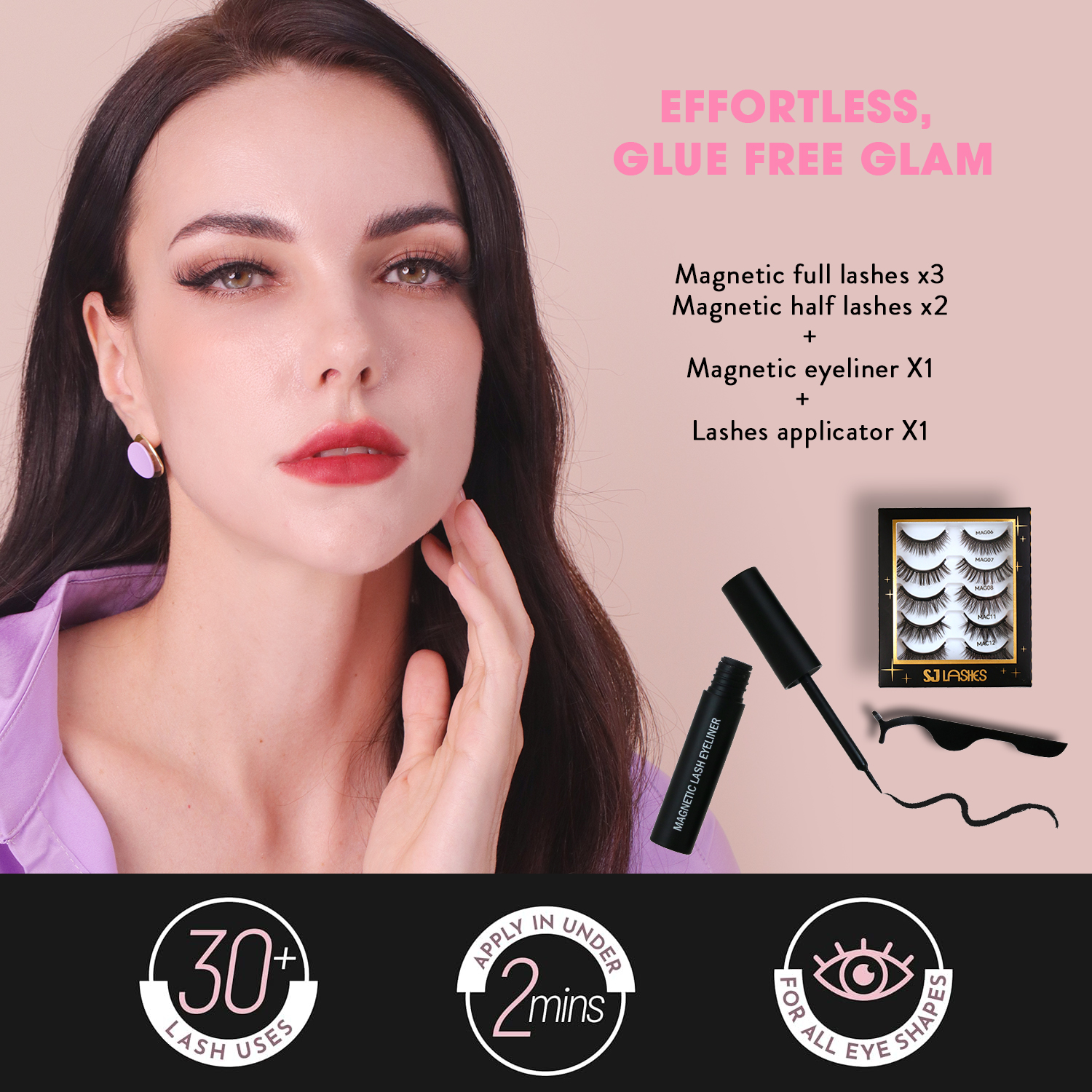
A magnetic lash set is sold as a system: several pairs, a magnetic liner, an applicator, and a promise that the customer never has to handle glue. But the customer decides whether she believes that promise before she opens anything. She decides from the box.
That is why magnetic lash packaging carries more weight than packaging for almost any other lash format. A five-pair set is a higher-ticket purchase with more components to explain, more styles to differentiate, and more reasons for a buyer to hesitate. The box has to answer all of it at a glance — and it has to survive being a box that gets reopened, reused and stored, because magnetic lashes are bought once and worn repeatedly.
This guide focuses on the packaging itself: how the structure, the material, the foil pattern, the window and the tray work together to sell a multi-pair magnetic set, how to specify each element, and how to keep the design consistent from the first sample to the thousandth reorder.
Quick decision matrix: Which magnetic lash box fits your business?
| Business model | Main customer problem | Recommended box spec | Merchandising priority | Best content angle |
|---|---|---|---|---|
| TikTok Shop or Instagram seller | The set must look like a complete kit, not loose lashes | Drawer or sleeve box, large window, foil frame for on-screen contrast | Dark base with metallic foil reads instantly on a phone | Foil detail, sliding reveal, liner plus lash close-ups |
| Amazon beauty brand | The listing must explain five styles and two lash types without a demo | Window box with a numbered tray and printed style codes | Legible text at thumbnail size; durable structure for shipping | Image set showing each style, the liner, and the fit |
| Salon or lash artist | Clients want a professional retail add-on that feels giftable | Drawer box with matte lamination and foil accents | Back-bar presentation; reusable storage for the customer | Client education, lash map guidance, aftercare |
| Beauty retailer or distributor | The set must display well and replenish predictably | Locked design at scale, consistent foil and tray per run | Shelf contrast, barcode planning, carton efficiency | Style comparison, display education, reorder terms |
| New private label brand | Differentiation without overcommitting to inventory | Low-MOQ sample round, then one hero box | Custom foil tone, pattern and window shape | Founder story, design process, unboxing |
| Gift or holiday line | The set must feel like a present before it is opened | Rigid or drawer box, satin ribbon optional, foil-heavy front | Tactile finish and weight in the hand | Gift framing, seasonal styling, unboxing |
There is no single correct box for a magnetic lash set. A TikTok seller needs a window that survives a vertical crop. An Amazon brand needs a tray whose style codes are readable in a photo. A salon needs a box the customer keeps on a vanity. A distributor needs a specification that does not drift between runs. The packaging should follow the channel — and for a multi-pair set, it usually has to serve two of these jobs at once.
What is a magnetic lash set window box?
A magnetic lash set window box is a retail package built to hold several pairs of magnetic lashes, a magnetic liner and an applicator in one presentation, with a transparent window that keeps the product visible from the shelf. The structure is usually either a folding carton with a window-cut front panel, or a two-piece drawer or sleeve-and-tray construction where an inner tray slides out of an outer sleeve.
The example in this guide uses the two-piece approach: a matte black card outer sleeve finished with matte gold foiling — a double-line frame traced around the face, starburst accents worked into the corners and mid-points, and a gold diamond pattern repeated along the side panels of the inner tray. The window keeps all five pairs visible. A white molded tray holds three full-band and two half-band pairs in a single column, each labeled with its own style code, with the magnetic liner and applicator completing the kit. No glue, reusable pairs, and a fit that suits different eye shapes.
It is a good format for:
- Brands selling magnetic lashes as a complete system rather than loose pairs.
- Sellers who need shelf or thumbnail contrast in a crowded beauty category.
- Salons retailing a professional add-on the client will reuse.
- Amazon and TikTok sellers who need a box that photographs and demonstrates well.
- Retailers who want the product to explain itself without staff.
- Distributors building a consistent visual family across several SKUs.
- Gift positioning, where weight and finish in the hand carry the value.
Why magnetic lash set packaging converts for B2B buyers
1. A dark base is what makes the foil read
The most common mistake in premium lash packaging is adding shine everywhere. A matte black surface under matte lamination gives metallic gold foiling a high-contrast field, so a double-line frame, corner starbursts and a repeated diamond lattice all register as one deliberate system rather than decoration. The restraint of matte-on-matte does more for perceived value than any gloss finish could.
This matters commercially because a five-pair set sits above the impulse price point. The customer has to be convinced before she reads the price, and contrast is the fastest way to do that. On a phone screen, in a marketplace thumbnail, or on a shelf under mixed lighting, a dark matte box with a metallic accent is legible at a distance where a busy four-color design is not.
2. The window turns the package into the product demo
A five-pair set has an unusual advantage: the product is genuinely attractive when laid out, and the tray can be designed to show that. A large window over a well-organized tray lets the customer count the pairs, see the difference between full-band and half-band styles, and understand that she is buying a system rather than a single pair.
That is also why the tray design is not an afterthought. When the pairs are held in a single column with clear style codes beside each one, the window becomes a comparison chart. If they are crowded, unbranded or shifting, the same window raises doubts instead of answering them.
3. The structure carries the unboxing — and the reuse
Magnetic lashes are bought once and worn repeatedly, which means the box is not discarded after the first use. It becomes the case the customer keeps on her vanity and opens every time she wears the set. A two-piece drawer structure with a sliding tray makes that repeated interaction feel intentional; a light folding carton that tears at the corner does not.
For a brand, that changes the economics of packaging. You are not paying for a box that survives one unboxing video — you are paying for a box that stays in the customer's home, carrying your logo, for months.
4. Printed style codes reduce support and returns
A magnetic set with five styles has a real risk: the customer cannot tell which pair is which, applies the wrong one, dislikes the result, and returns the kit. Printing the style code beside each pair on the tray — and repeating that code in the listing images and instructions — removes that failure mode before it happens.
Support tickets and returns are where packaging quietly earns or loses money. A tray that explains itself is cheaper than a customer service team answering the same question.
How to specify a magnetic lash set box
Structure: folding carton, sleeve, or drawer
The structure determines both the unboxing and the shipping profile. A window-cut folding carton is the most economical option and works well for high-volume retail and marketplace programs. A sleeve-and-tray or drawer construction — an outer sleeve wrapping an inner tray that slides out — costs more but delivers a tactile reveal that suits gift positioning and higher price points.
For this example, the die-cut template shows both components laid out separately: the flat outer sleeve on one side and the inner tray on the other, with fold lines scoring every wall and dust flap. That template is the document that locks the design — it defines where the foil sits, where the window is cut, and how the tray closes. Approving it early prevents expensive surprises at production.
Paper and finish
Black card stock under matte lamination is the base of this design. Matte lamination protects the surface, resists fingerprints in handling, and — most importantly — keeps the surrounding surface non-reflective so the foil carries all the shine. Gloss lamination would flatten the effect and show scratches.
For standard retail, folding cartons are produced from coated art paper in 250gsm, 300gsm or 350gsm. For gift positioning, rigid boxes are available at 1.5mm, 1.8mm or 2.0mm thickness with magnetic closure or a lift-off lid, optionally finished with a satin ribbon.
Foil color and pattern system
Gold, silver and rose gold are the standard foil colors, and all three can be applied to any paper shade. In this design the foil does four jobs at once: a double-line frame around the face, starburst accents at the corners and mid-points, a repeated diamond lattice along the tray's side panels, and the brand logo with its tagline.
That is a pattern system, not a single stamping. It works because one visual language repeats across faces that are seen at different moments — the front as a shelf billboard, the side panels as the tray slides open. When discussing foil with a supplier, specify the pattern elements individually, not just the logo, because each adds to die and setup cost.
Window size and film
The window should be large enough to show all pairs without crowding and framed so it reads as a deliberate design element. Window shapes range from standard rectangles to heart and teardrop options, and the transparent PVC film is available in different thicknesses (10 mil to 14 mil) for clarity and protection. The opening can also be sized to show a single pair or the full set.
Tray, holding, and style codes
Inside, the tray does the merchandising. Molded trays hold each pair in its natural curve so lashes keep their shape in transit and present properly through the glass. A single-column layout with printed style codes beside each pair turns the tray into a comparison chart. Leave room for the liner and applicator so the kit arrives complete and photographed as one unit.
Information panels
A complete set has more to explain than a single pair: how the liner works, how long to let it dry before placing the lash, how to remove and clean the pairs, how to store the tray, and which style suits which look. Reserve space for application steps, care guidance, cautions and any required label information — and draft that copy before the artwork is finalized rather than squeezing it in afterwards.
What can be customized
- Box structure: window folding carton, sleeve-and-tray, or drawer.
- Paper stock and paper shade, including black card and specialty papers.
- Foil color and pattern elements: frame, accents, lattice, logo, tagline.
- Pantone spot color matching for printed elements around the foil.
- Matte or gloss lamination, spot UV, embossing and debossing.
- Window size and shape, and PVC film thickness.
- Tray design, lash arrangement, and printed style codes.
- Kit line-up: number of pairs, full-band and half-band mix, liner, applicator.
- Information panels: application steps, care guidance, label data, brand story.
Packaging is not decoration: it is part of the selling system
In a crowded lash category, the customer often decides before touching the product. A magnetic lash set box has to answer three questions immediately:
- What is inside, and how many pairs do I get?
- What result can I expect, and do I need glue?
- Why should I remember this brand?
The window answers the first. The absence of glue is answered by the liner visible in the tray and the copy on the box. The dark matte field and the gold foil logo answer the third. None of those answers requires a busier design — they require a disciplined one.
For more options across the category, review the SJ LASHES strip lashes paper boxes range and the magnetic lashes product line, and compare finishes in our guide to foil stamping vs spot UV vs embossing.
How to choose a magnetic lash packaging supplier
Unit price is only one variable. A low quote does not produce a profitable launch if the foil registration drifts, the tray fit is loose, or the second run does not match the first.
A practical supplier scorecard
Ask whether the supplier can provide:
- Gold, silver and rose gold foiling on dark and specialty stocks.
- Die-cut structure development, including sleeve-and-tray and drawer formats.
- Molded trays that hold lash curve and accommodate liner and applicator.
- Printed tray codes and consistent insert positioning.
- Pantone spot color matching for printed elements.
- Rigid box construction if your positioning calls for it.
- Assembly and hand-checking of each set before packing.
- One production partner for lashes, boxes and tools, so the visual language stays consistent.
Sampling and approval process
A reliable OEM workflow lets you evaluate the physical box before a bulk order. Request samples that show:
- Foil color and finish under normal retail lighting.
- Pattern registration across the front and side panels.
- Legibility of style codes and information text at final size.
- Paper weight, rigidity and feel in the hand.
- Lamination finish and resistance to fingerprints and scuffs.
- Tray fit: does each pair sit securely without shifting?
- Window clarity and film thickness.
- The complete kit assembled as it will ship.
A fast sample helps; a documented approval process matters more. Keep the approved sample, the signed die-cut template, the artwork version and the specification sheet together, so later production is measured against one reference.
Locked design and reorder consistency
This is where magnetic lash packaging differs from single-pair packaging. A multi-component set has more variables to drift: foil tone, tray fit, lash specs and kit line-up. Reorders should run against a locked design and archived specifications, so colors, foiling and lash specs stay consistent from the first thousand onward. Ask how your supplier archives specifications and what happens if a material supplier changes.
Flexible MOQ and mixed-style support
Low MOQ is valuable for new brands, but evaluate it alongside sample cost, die and setup fees, and replenishment planning. Ask how mixed styles are handled: whether a five-pair set can combine full-band and half-band styles, whether each style carries its own minimum, and how repeat orders are priced.
One-stop product and packaging coordination
When lashes, trays, liner and outer boxes come from different suppliers, small differences in color, dimensions and timing damage the launch. A one-stop OEM partner coordinates product and presentation as one system, so the box, the tray and the lashes arrive speaking the same language.
Channel-specific recommendations
For TikTok Shop and Instagram
Open on the foil. In short-form video, the moment light crosses a metallic frame or a diamond lattice as the tray slides out is more persuasive than any voiceover. Film the drawer reveal, then cut to the tray with all five pairs visible, then to the liner and the finished eye. The box is the fastest way to show that this is a kit rather than loose lashes.
For Amazon
The listing has to explain the set without a demo: how many pairs, which are full-band and which are half-band, what the liner does, how to apply and remove, and how to store the set. Use the printed style codes from your tray in your image set so the customer can match what she sees in the photo to what she finds in the box. Keep packaging claims consistent across title, bullets, images and insert card, and do not use medical, hypoallergenic, waterproof or guaranteed-wear language unless the final product documentation supports it and the claim is permitted in the target market.
For salons and lash artists
Position the set as a professional retail add-on and an education tool. A box the client keeps on her vanity becomes long-term brand presence, and the printed style codes make it easy for an artist to recommend a specific pair. Pair the set with branded eyelash tweezers to complete the retail presentation.
For distributors and retailers
Prepare a wholesale specification sheet covering set contents, box dimensions, paper weight, foil color, tray dimensions, liner and applicator specs, case pack, barcode plan, carton information, lead time and the reorder process. Retail buyers need confidence that the set will display well, explain itself and replenish predictably.
A practical OEM launch workflow
Step 1: Define the customer and the channel
Decide who buys the set and where, before deciding the finish. An Amazon listing, a TikTok product and a salon retail set may need different window sizes, tray layouts and information panels.
Step 2: Set the price position and the kit line-up
Five pairs sit above impulse pricing, so the kit has to justify the price. Decide the mix of full-band and half-band styles, whether a liner and applicator are included, and what the set should sell for — then specify packaging to match that promise, not to exceed it.
Step 3: Specify the box
Prepare the logo file, color references, foil pattern elements, artwork, box structure, window preference, tray design and required label information. Confirm what appears on the front, the side panels and the information panels.
Step 4: Approve the die-cut template and a physical sample
Sign off the die-cut structure before production — including window position, foil areas and tray fit. Then evaluate foil color and registration, paper weight, window clarity, tray security and legibility at final size.
Step 5: Build the sales education system
Prepare product photography, foil close-ups, a drawer-reveal video, a style comparison, a care guide, an FAQ and channel-specific listing assets. One clear demonstration can serve as an Amazon image, a TikTok clip, an Instagram Reel and a product page asset.
Step 6: Launch with a testable order quantity
Use a pilot order or a focused first launch where possible. Track style sell-through, customer questions, return reasons, review language and repeat purchases. With magnetic sets, style-level data is especially valuable: it tells you which pairs deserve to become single-style refills.
Step 7: Replenish winners and extend the line
Once the data identifies the strongest configuration, extend through additional styles, refill pairs, a liner-inclusive bundle, or a rigid gift version. Reorders should run against the locked design so the extended range stays visually consistent.
What to include in a quote request
A complete brief lets the factory recommend a more accurate solution. Include:
- Target market and sales channel.
- Customer profile and intended price position.
- Kit line-up: number of pairs, full-band and half-band mix, liner, applicator.
- Box structure preference: window folding carton, sleeve-and-tray, or drawer.
- Paper stock and weight, or the finish you want to achieve.
- Foil color and pattern elements.
- Logo file, typeface and artwork references.
- Window size and shape, and tray requirements including printed codes.
- Information panel copy, claims and label data.
- Estimated sample quantity and first order quantity.
- Required delivery window and destination.
- Compliance, labeling, documentation or testing requirements for the target market.
👉Send SJ LASHES your packaging and kit requirements for a free sample and quote
Quality, compliance and transparent claims
Lash products are used close to the eyes, and magnetic sets add components that deserve specific attention. A professional private label program should review:
- Material and component information for the box, tray and any magnetic elements.
- Ingredient and label requirements for the magnetic liner.
- Magnet safety and handling guidance, including advice for customers with implanted medical devices.
- Removal and cleaning instructions for reusable pairs.
- Batch, shelf-life, storage and shipping information where applicable.
- Packaging recyclability claims and the exact materials used.
- Market-specific cosmetic and labeling requirements.
- Patch-test and irritation guidance where appropriate.
- A clear customer service and complaint-handling process.
Avoid publishing claims such as "medical grade," "completely safe for sensitive eyes," "waterproof," "FDA approved," or a guaranteed wear period such as a specific number of hours, unless they are supported by the final product documentation and permitted in the target market. For customers with eye conditions, allergies, or a history of reactions, advise them to follow professional medical guidance and to stop use if discomfort occurs.
This approach strengthens E-E-A-T: it demonstrates experience, technical understanding, responsible product education and respect for the customer's safety.

Why SJ LASHES is a practical OEM partner
SJ LASHES combines lash manufacturing and packaging development in one workflow. The product range covers strip lashes, magnetic lashes, segmented DIY lashes, volume fan lashes, individual eyelash extensions, adhesives, removers, applicators and private label packaging.
For a magnetic lash program, this creates several advantages:
- Product and packaging can be developed together, including the tray that holds the set.
- Die-cut structures, foil patterns and window engineering come from one team.
- Low-MOQ options support a controlled first launch.
- Fast sampling shortens the approval cycle.
- Each set is assembled and checked by hand in our own factory.
- Reorders run at scale against a locked design, keeping colors, foiling and lash specs consistent from the first thousand onward.
Box structure, foil tone, window size, pattern, lash styles and kit line-up are all customizable, with low MOQ and fast sampling for first runs.
FAQ
What is a magnetic lash set window box?
It is a retail package that holds several pairs of magnetic lashes, a magnetic liner and an applicator, with a transparent window that keeps the product visible. Structures range from window-cut folding cartons to two-piece sleeve-and-tray or drawer boxes.
Why use a drawer or sleeve structure instead of a simple carton?
Because magnetic lashes are worn repeatedly, customers keep the box and reopen it. A sliding tray makes that repeated interaction feel intentional and protects the pairs better, while a folding carton is more economical for high-volume programs.
Why is matte black with gold foil such a common combination?
Contrast. Matte black keeps the surrounding surface non-reflective, so the metallic foil carries all the shine. The result reads as deliberate and premium, and it stays legible at thumbnail size.
Should the tray show style codes?
Yes. Printing a code beside each pair lets the customer match what she sees in the box to the listing images and instructions, which reduces confusion, support requests and returns.
Can I customize the foil pattern, not just the logo?
Yes. Frames, corner accents, side-panel lattice patterns, logos and taglines can all be specified as separate foil elements — though each adds to die and setup cost, so agree on the pattern system early.
Can the window and tray be customized?
Yes. Window shapes range from standard rectangles to heart and teardrop designs, with PVC film available in different thicknesses. Tray layout, lash arrangement and printed codes are all specified during sampling.
How do you keep reorders consistent?
By running reorders against a locked design with archived specifications — including the signed die-cut template, approved sample, foil tone and tray dimensions — so foil, color and lash specs stay stable from the first production run onward.
What should I send when requesting an OEM quote?
Your target market, sales channel, price position, kit line-up, box structure preference, paper spec, foil color and pattern, artwork and logo file, window and tray requirements, information panel copy, quantities, delivery window, and any compliance or documentation requirements.
Final takeaway: sell the set through the box
A magnetic lash set is a system, and its packaging has to behave like one. A dark matte base gives the foil something to work against. A well-engineered tray turns the window into a comparison chart. Printed style codes remove the confusion that produces returns. And a structure the customer keeps on her vanity keeps your brand in her home long after the first wear.
If you are launching a private label magnetic lash line, adding a retail set to a salon, or refreshing packaging that no longer matches your price point, start with a clear specification, an approved die-cut template, and a physical sample in your hand. Structure is the part customers feel before they read a single word.
👉View the black and gold foil 5-pair magnetic set and request a free sample or quote from SJ LASHES
For more application education, packaging ideas and factory demonstrations, follow SJ LASHES on Instagram and YouTube, and visit the SJ LASHES blog.