EN
EN

Lash Liquid Packaging: The 2026 OEM Guide to Private Label Bottles, Labels and Boxes
Lashes are the product customers come for. The liquids are the products they come back for. Bonder, sealant, balancer, cleanser, remover — these are the consumables that keep a brand in a customer's routine, and they are also the products customers judge most harshly, because they are the ones used close to the eyes.
Yet liquid packaging is where most lash brands are weakest. The lash box is designed carefully, then the bonder ships in a generic bottle with a label that was laid out at the last minute. The result is a brand that looks established on one shelf and improvised on the next.
This guide covers liquid packaging specifically: which container form suits which product, how caps, labels and matching boxes turn a functional bottle into a retail product, how to specify each element before artwork, and what makes a liquid line hold together from the first sample to the thousandth reorder.
Quick decision matrix: Which liquid packaging fits your business?
| Business model | Main customer problem | Recommended packaging | Merchandising priority | Best content angle |
|---|---|---|---|---|
| TikTok Shop or Instagram seller | The product must look precise on camera | Clear or frosted dropper bottle with a metallic cap | Cap shine and dropper close-ups that read on a phone | Application demo, one-drop precision, before-and-after |
| Amazon beauty brand | The listing must carry information the label cannot | Bottle with a printed label plus a matching retail box | Legible ingredient and usage text; box that survives shipping | What it does, when to use it, full routine order |
| Salon or lash artist | Supplies must look credible on a professional workstation | Frosted dropper or airless pump with clean typography | Clinical look, hygienic dispensing, easy wipe-down | Professional usage, dosage control, hygiene |
| Beauty retailer or distributor | The range must display as one family | Consistent bottle family with matched cartons | Shelf consistency, barcode planning, carton efficiency | Range overview, display education, reorder terms |
| New private label brand | The line must look established from the first launch | One hero liquid with matching box, then extend | Shared visual language across bottle, label and box | Founder story, design process, unboxing |
| Existing lash brand extending | Customers already ask for aftercare products | Cleanser and remover first, then bonder and balancer | Bottles that match the existing lash box finishing | Cross-sell content, bundle framing, care education |
The right container is a function of the product's job, not its price. A bonder that must be dispensed drop by drop suits a dropper. A gel remover that must stay exactly where it is applied suits an airless pump. A cleanser used in a wet environment suits a foam pump. Choosing the container first and the branding second is what keeps a liquid line coherent.
What counts as lash liquid packaging?
Lash liquid packaging covers the container, the closure, the label and the outer box for any fluid product in the lash routine. In practice it splits into four formats.
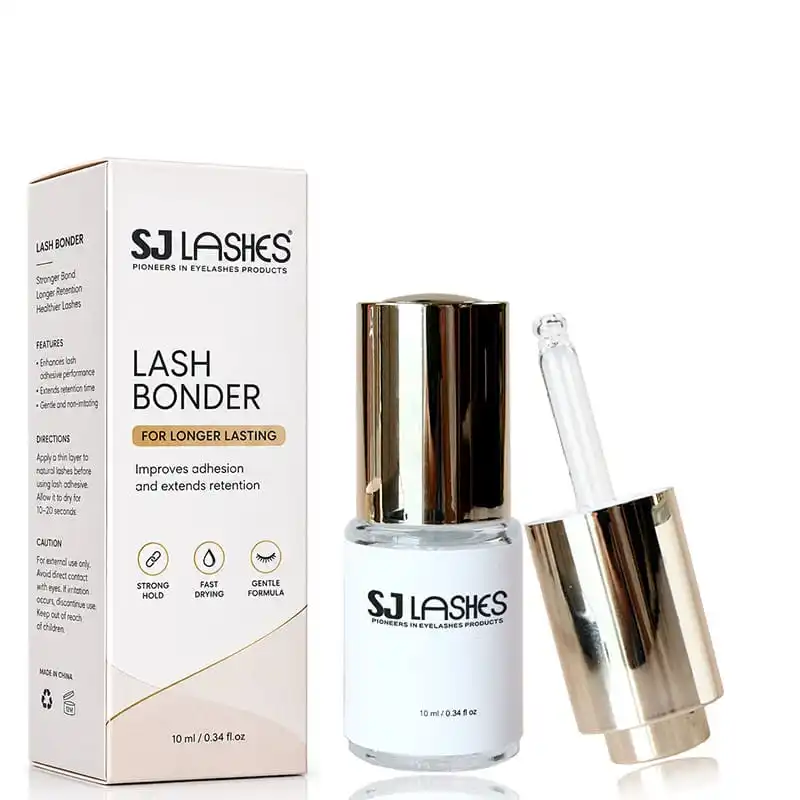
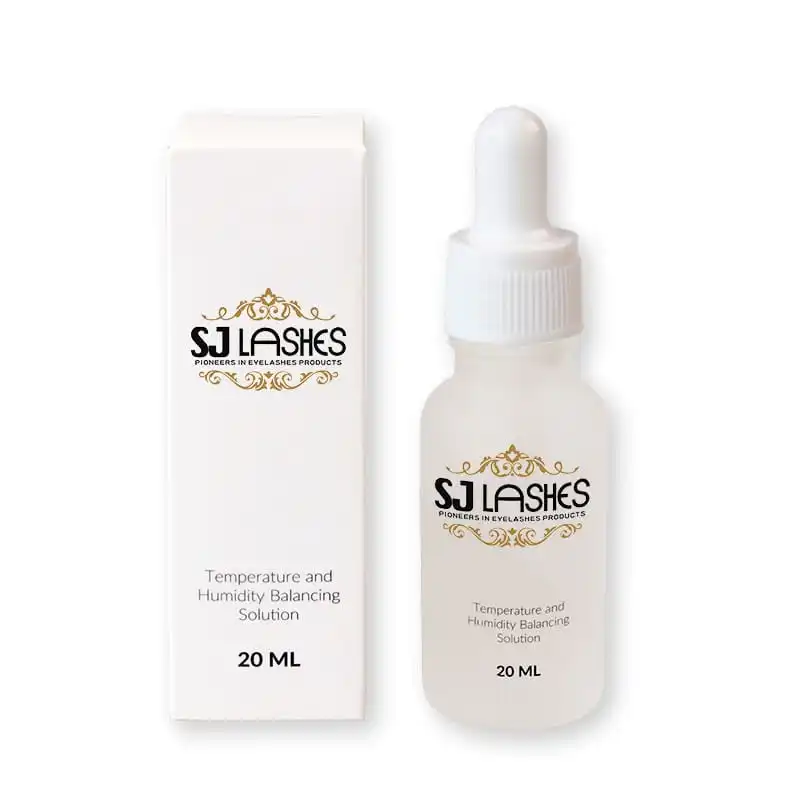
Dropper bottles. Used for bonders, sealants and balancing solutions where application is measured in drops. A 10ml clear glass dropper bottle with a precision glass dropper and a high-shine metallic gold cap is the classic premium configuration: the high-clarity glass displays the formula, and the cap provides the shelf shine. Frosted glass is the alternative when a softer, more clinical look is wanted.
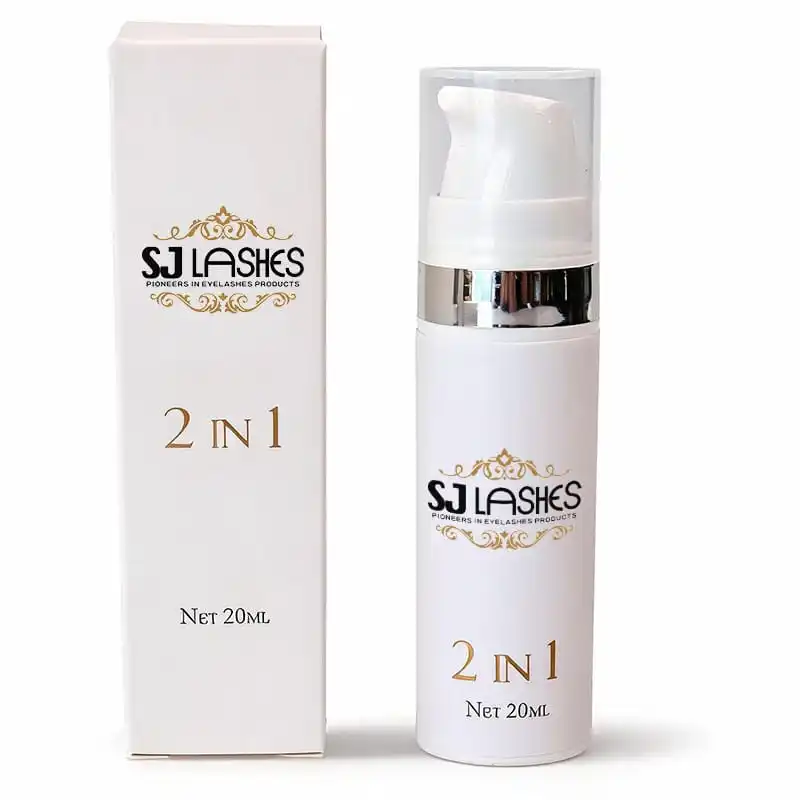
Airless pump bottles. Used for gel removers and denser formulas, where hygienic dispensing and zero waste matter and where oxidation is a concern. A 20ml airless pump with a clear protective cap prevents drying out, and the format reads as professional rather than generic. These are usually paired with a matching paper box.
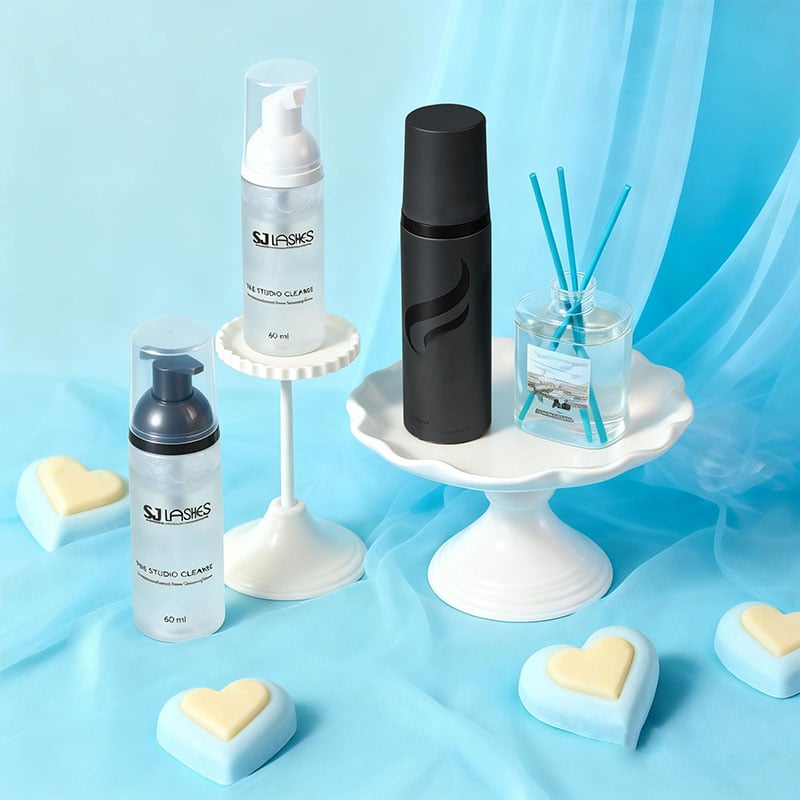
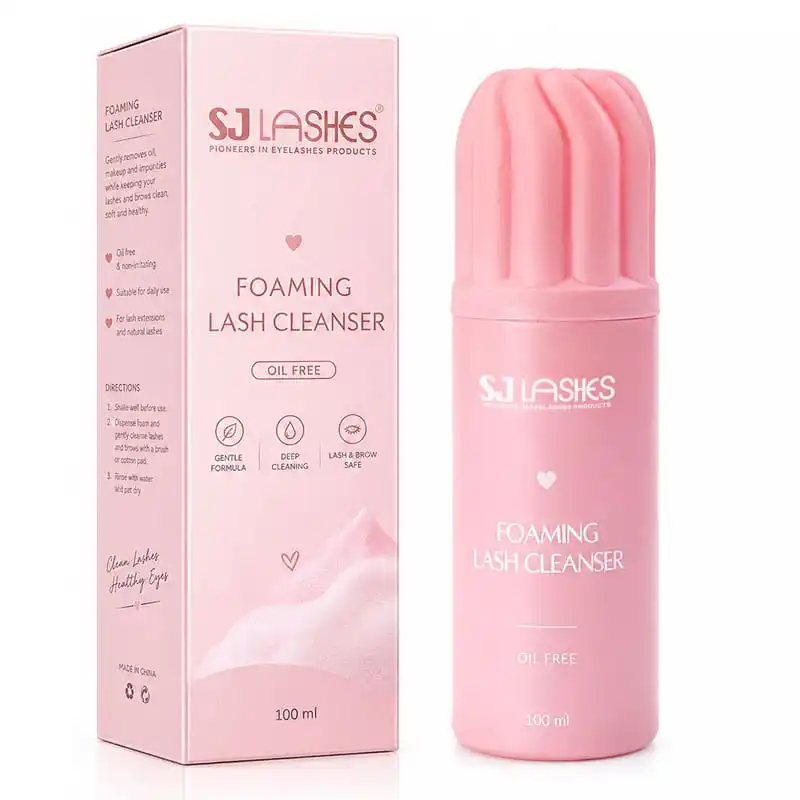
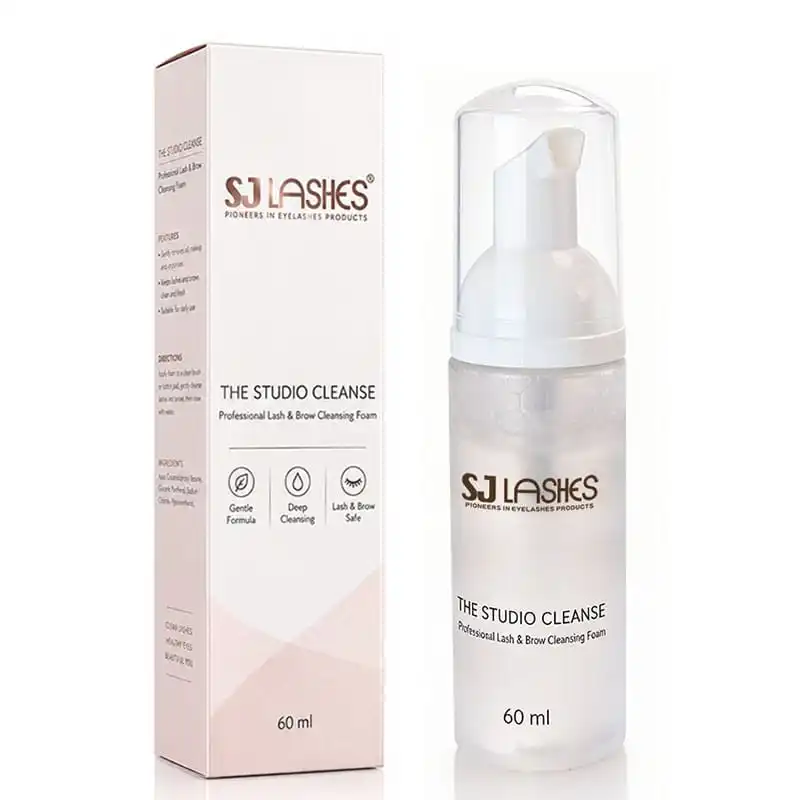
Foam cleanser bottles. Used for daily cleansing. A transparent foam bottle with a printed label, or a 100ml foaming cleanser format with a 3D printed logo, suits a pump used in a wet environment and communicates "cleanser" at a glance.
Serum tubes and specialty containers. Curved tube formats for lash growth serums, and mascara-style tubes for volumizing lash primers with raised 3D texture. These formats carry tactile branding well and photograph distinctly against a bottle family.
Liquid packaging decisions matter most for:
- Brands selling aftercare, not just lashes.
- Sellers who need consumables to drive repeat purchases.
- Salons building a professional back-bar range.
- Amazon and TikTok sellers needing complementary listings.
- Retailers who want the liquids to match the lash packaging.
- Distributors building a full-category offering.
- Gift sets, where a matched bottle and box complete the presentation.
Why liquid packaging converts for B2B buyers
1. Containers signal professionalism before the formula is judged
A customer cannot evaluate a bonder by looking at it. She evaluates the container. Clear glass with a metal cap reads precise and clinical; a frosted body reads soft and modern; an airless pump reads hygienic and considered. That first judgment happens in less than a second and shapes how the product's performance is interpreted afterwards.
For a brand charging a professional price, a generic container undermines the claim before the first use. The container is not packaging around the product — for liquids, it is most of the product experience.
2. The label is where compliance and selling meet
Liquid products carry more mandatory content than lashes: product name and function, net volume, ingredients, usage directions, cautions, batch or lot coding, and shelf-life or period-after-opening information where applicable. That content has to be designed, not squeezed in at the last minute.
The brands that handle this well treat the label as a selling surface with a compliance layer, not the reverse. Function line, dosage guidance and routine order can all be communicated on the label — which reduces support questions and returns while satisfying the requirements of the target market.
3. Matching boxes turn a bottle into a retail product
A bottle alone is a supply item. A bottle in a matching box is a retail product: it can carry front-facing branding, sit on a shelf, be photographed as a set, be barcoded and be gift-wrapped in a bundle. Matching white paper boxes with custom labels, finished with matte lamination, hot foil stamping or spot UV, are the standard route.
This is also where cross-selling becomes easy. When the bonder box, the cleanser box and the lash box share a finish, retailers can merchandise them together and brands can photograph them as a routine.
4. Consistent dispensing protects the reorder cycle
Liquids are repurchased, which means the packaging has to perform repeatedly: a dropper that drips cleanly, a pump that does not clog, a cap that seals, a label that survives a wet bathroom shelf. Each failure shortens the replenishment cycle you were counting on.
This is why dispensing behaviour belongs in the sampling checklist alongside color and typography. A remover supplied in a dense gel texture in an airless pump that dispenses without running is a better product experience than the same formula in a bottle that floods the applicator.
How to specify lash liquid packaging
Choose the container for the product's job
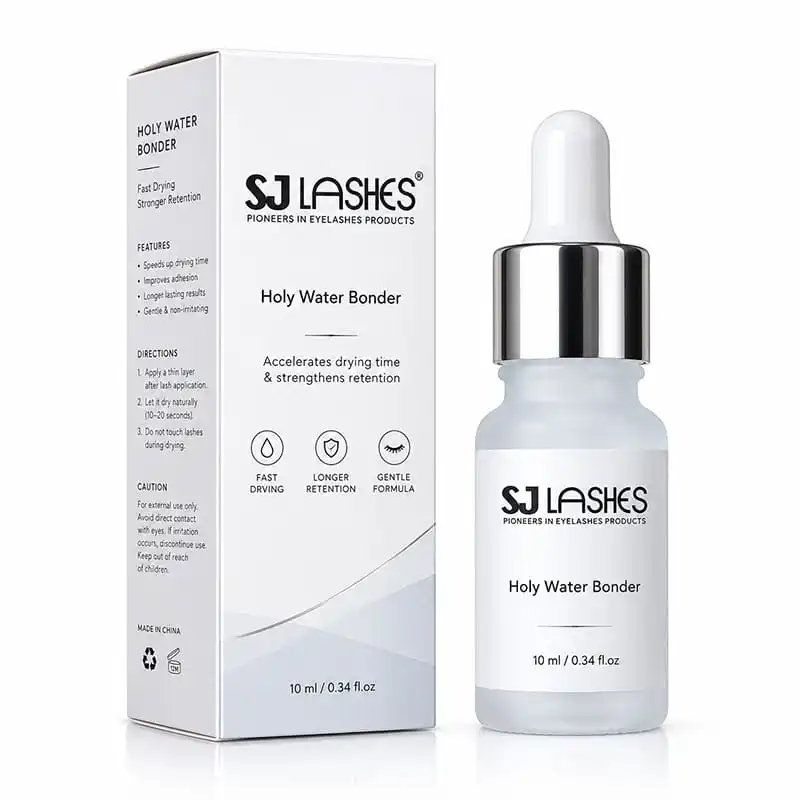
Start from dispensing behaviour, not aesthetics. Drops for bonders and sealants; gels for removers where the formula must stay in place and must not reach the eye; foams for cleansing; tubes for serums and primers. Only after the format is settled should the bottle finish be chosen — crystal-clear glass for formula visibility, frosted glass for a softer clinical look.
Specify the closure as a design element
The cap is often the only metallic element on a liquid product, which makes it the cheapest premium signal in the entire line. Gold, silver and rose gold metallic caps are the standard options and should match the foil tone used on your lash boxes and cartons. A mismatched cap color across a bottle family is one of the most common and most visible inconsistencies in private label lash ranges.
Design the label grid before the artwork
Set a grid and reuse it across every product: logo position, product name, function line, net volume, usage block, caution block, ingredient block, batch field. A consistent grid across five bottles reads as a professional range; five individually designed labels read as five suppliers. Decide the label material early too — adhesive labels versus direct printing — because the choice affects both cost and how often artwork can be changed.
Match the box to the bottle
The carton should be engineered around the filled container: internal fit, protection during transport, and a front panel that can carry brand identity while the label carries information. Folding cartons in 250gsm, 300gsm or 350gsm coated art paper are the standard retail choice; rigid gift boxes at 1.5mm to 2.0mm suit gift positioning. Finishing — matte or gloss lamination, hot foil stamping, spot UV, embossing, debossing — should mirror the lash packaging.
Decide printing method by volume
Direct logo printing onto the container suits higher volumes and stable artwork. High-end matte-finish labels suit lower volumes, frequent artwork changes and markets where label content must be updated often. Some lines use both: a printed logo on the bottle plus a label carrying compliance text.
What can be customized
- Container: clear or frosted glass, several volumes, glass or plastic dropper, airless pump, foam pump, curved tube.
- Closure: gold, silver or rose gold metallic caps; protective clear caps for pumps.
- Branding: direct precision printing onto the bottle, 3D printed logos, or matte-finish adhesive labels.
- Label: material, water resistance, grid, typography, localized ingredient and instruction layouts.
- Box: folding carton or rigid gift box, dimensions engineered to the filled container, matching finishing.
- Finishing: Pantone spot color, hot foil stamping, spot UV, embossing, debossing, gloss or matte lamination.
- Kit line-up: which liquids ship together, and whether a tool, instruction card or box insert accompanies them.
How to choose a liquid packaging supplier
Liquids combine two supply chains — formula and packaging — and the brands that struggle are usually the ones where those two were handled separately.
A practical supplier scorecard
Ask whether the supplier can provide:
- Container sourcing across dropper, airless pump, foam and tube formats.
- Closure options in gold, silver and rose gold to match your existing packaging.
- Direct logo printing on containers, plus 3D printed logo capability.
- Label design and typesetting that accommodates mandatory content.
- Carton development engineered around the filled container, not around a nominal size.
- Consistent finishing across bottle, label and box.
- Pantone spot color matching to hold brand shades across materials.
- Small-volume flexibility for a first launch, with scale for reorders.
- Formulation consultation and documentation support for the target market.
Sampling and approval process
Request samples that show:
- Container clarity or frosting, and how the formula looks through it.
- Dropper or pump function: flow rate, dosage control, dripping behaviour.
- Closure fit, seal integrity and leakage under transit conditions.
- Label legibility, especially ingredient text at final size.
- Label adhesion and water resistance on a wet surface.
- Cap color and finish against your existing lash box under the same lighting.
- Carton fit around the filled container, and protection when shipped.
- The complete set assembled and photographed as one family.
A fast sample helps; a documented approval process matters more. Keep the approved sample, the artwork version, the label specification and the carton dieline together, so later production is measured against one reference — especially for liquids, where label text is easy to change and easy to get wrong.
Locked specifications and reorder consistency
A liquid line has more moving parts than a lash SKU: container supplier, closure supplier, label artwork, formula, carton structure and finishing. Reorders should run against archived specifications so a remover ordered six months later matches the first batch — same bottle, same pump, same cap tone, same label. Ask how specifications are archived and what happens if a component supplier changes.
Flexible MOQ across a mixed liquid line
Low MOQ matters most here, because a new brand needs to test several liquids rather than commit to one. Ask how minimums apply across a mixed line, whether label artwork changes are charged per item, and how reorders are priced once a product proves itself.
Channel-specific recommendations
For TikTok Shop and Instagram
Show the dispensing, not the bottle. A dropper releasing one controlled drop, or a pump delivering a dense gel that stays where it lands, demonstrates product quality better than any description. Metallic caps catch light well on camera, which makes them worth filming deliberately.
For Amazon
Liquid listings live on clarity. Explain what the product does, when in the routine it is used, how much to use, and how it relates to the other liquids in the line. Keep claims consistent across the title, bullets, images, label and any insert card, and avoid medical, hypoallergenic, waterproof or guaranteed-duration language unless the final product documentation supports it and the claim is permitted in the target market.
For salons and lash artists
Lead with hygiene and control: an airless pump that dispenses without waste, a gel that does not run, a label that is legible with wet hands. A consistent bottle family on a workstation signals a professional range, and matching boxes make retail add-ons easy to display.
For distributors and retailers
Prepare a specification sheet per SKU covering fill volume, container type and material, closure type and color, label dimensions, carton dimensions, case pack, barcode plan, shelf life and lead time. Retailers need to know the range will display consistently and replenish predictably.
A practical OEM launch workflow
Step 1: Map the routine
List the liquids your customer uses from preparation to removal, then mark what you currently sell. The gaps are the products to develop.
Step 2: Assign a format to each product
Match container to dispensing need before considering branding: dropper, airless pump, foam pump or tube.
Step 3: Define the visual system
Set the label grid, cap tone, bottle finish, carton finishing and box structure before artwork begins. Test it against your existing lash packaging so the liquids look like an extension of the brand.
Step 4: Specify contents and compliance
Confirm fill volume, closure, label content, ingredient and caution text, batch coding and required documentation for the target market — before artwork, not after.
Step 5: Approve physical samples
Check dispensing behaviour, leakage, label adhesion, cap color matching and carton fit. Compare against your lash box under the same lighting.
Step 6: Launch a testable quantity
Use a pilot order where possible and track which liquid is bought most often alongside lashes. That data tells you which product deserves the next investment.
Step 7: Replenish and extend
Extend into additional volumes and formats once the core line proves itself, keeping reorders against locked specifications.
What to include in a quote request
- Target market and sales channel.
- The liquid products you need and their function in the routine.
- Fill volume and container format preference.
- Closure type and cap color.
- Label content, artwork and logo files, and whether you need direct printing or labels.
- Box structure, dimensions and finishing preferences.
- Whether the line must match your existing lash packaging.
- Estimated sample quantity and first order quantity.
- Required delivery window and destination.
- Compliance, labeling, documentation or testing requirements for the target market.
Send SJ LASHES your liquid packaging requirements for a free sample and quote
Quality, compliance and transparent claims
Liquids are the most regulated part of a lash range, and they are used close to the eyes. A professional private label program should review:
- Ingredient lists and label requirements for every liquid product.
- Net volume, batch or lot coding, and shelf-life or period-after-opening information where applicable.
- Usage directions, cautions and patch-test guidance where appropriate.
- Container and closure specifications, including seal performance and leakage control.
- Compatibility between the formula and the container, including any interaction with the pump or dropper.
- Transport and storage requirements for liquids, which differ from dry goods.
- Packaging recyclability claims and the exact materials used.
- Market-specific cosmetic and labeling requirements.
- A clear customer service and complaint-handling process.
Avoid publishing claims such as "medical grade," "completely safe for sensitive eyes," "hypoallergenic," "waterproof," "FDA approved," or a guaranteed cure or wear duration unless they are supported by the final product documentation and permitted in the target market. For customers with eye conditions, allergies or a history of reactions, advise them to follow professional medical guidance and to stop use if discomfort occurs.
This approach strengthens E-E-A-T: it demonstrates experience, technical understanding, responsible product education and respect for the customer's safety.
Why SJ LASHES is a practical OEM partner
SJ LASHES combines lash manufacturing and packaging development in one workflow, and the same range extends to the liquids around the lashes: bonders, sealants, balancing solutions, temperature and humidity balancers, foam cleansers, gel removers and growth serums.
For a brand building a liquid line, this creates several advantages:
- Formula development and packaging design are handled as one project, so the bottle suits the product.
- Containers, closures, labels, cartons and instruction cards come from one coordination point.
- Cap tones and finishing can be matched to your existing lash packaging.
- Low-MOQ options support a controlled first launch across several liquids.
- Fast sampling shortens the approval cycle for new formats.
- Reorders run against locked specifications, keeping bottles, caps, labels and boxes consistent.
- The line can grow from one hero liquid into a complete professional range.
Explore the full packaging accessories range, review eyelash extensions glue and remover and aftercare products, or see the custom packaging service.
FAQ
What container should I use for lash liquid products?
Match the container to the dispensing need. Dropper bottles suit bonders, sealants and balancers dispensed in drops. Airless pumps suit gel removers and denser formulas needing hygienic, zero-waste dispensing. Foam pumps suit cleansers. Tubes suit serums and primers.
Is frosted glass better than clear glass?
Neither is better — they signal different things. Clear glass displays the formula and reads precise and clinical; frosted glass reads softer and more modern. The right choice depends on your brand direction and how the formula looks through the container.
Why do liquid products need a matching box?
Because a bottle alone is a supply item. A matching box makes it a retail product: it carries front-facing branding, can be shelved, barcoded, gifted and photographed as part of a routine with your lashes.
What has to appear on a liquid label?
Typically the product name and function, net volume, ingredients, usage directions, cautions, batch or lot code, and shelf-life or period-after-opening information where applicable, plus responsible party details. Requirements vary by market, so confirm before printing.
Should I print my logo on the bottle or use labels?
Direct printing suits higher volumes and stable artwork. Matte-finish labels suit lower volumes and frequent artwork changes, and are easier to update when label content changes. Some lines use both.
How do I keep a liquid line consistent on reorders?
Lock the specifications — container, closure and cap color, label artwork, formula, carton structure and finishing — and archive them, so a product ordered months later matches the original batch.
Can caps be matched to my existing lash box?
Yes. Gold, silver and rose gold metallic caps can be specified to match the foil tone on your lash boxes and cartons, which is one of the fastest ways to make a liquid line look like part of the same brand.
What should I send when requesting an OEM quote?
Your target market, sales channel, the liquids you need, fill volumes and container preferences, closure type and cap color, label content and artwork, box structure and finishing, quantities, delivery window, and any compliance or documentation requirements.
Final takeaway: the bottle is the product experience
For dry goods, packaging carries the product. For liquids, the packaging is the product experience: the drop that comes out, the pump that does not clog, the cap that seals, the label that stays readable, the box that makes it all look like a brand worth paying for.
If you are launching a private label liquid line or fixing one that never matched your lashes, start by matching container to function, set the label grid and cap tone before artwork, engineer the carton around the filled bottle, and approve a physical sample of the whole set together. A liquid range is only as credible as its least considered bottle.
View the packaging accessories range and request a free sample or quote from SJ LASHES
For more application education, packaging ideas and factory demonstrations, follow SJ LASHES on Instagram and YouTube, and visit the SJ LASHES blog.