EN

Bifold Lash Gift Box: Both Halves Hold Product (2026)
In an ordinary box, the lid has one job: to be a lid. It covers the product, it carries a logo, and when it opens it becomes something to put down.
In a bifold lash gift box, the lid is a second tray. It is fitted, printed and loaded, and it holds product just as the base does. Open the box and the range appears in two directions at once — not one row to dig through, but the whole line laid out.
That single decision is what makes this format worth the extra cost, and it is also the source of every engineering problem in it. A lid that carries product is a lid that has to be built for weight.
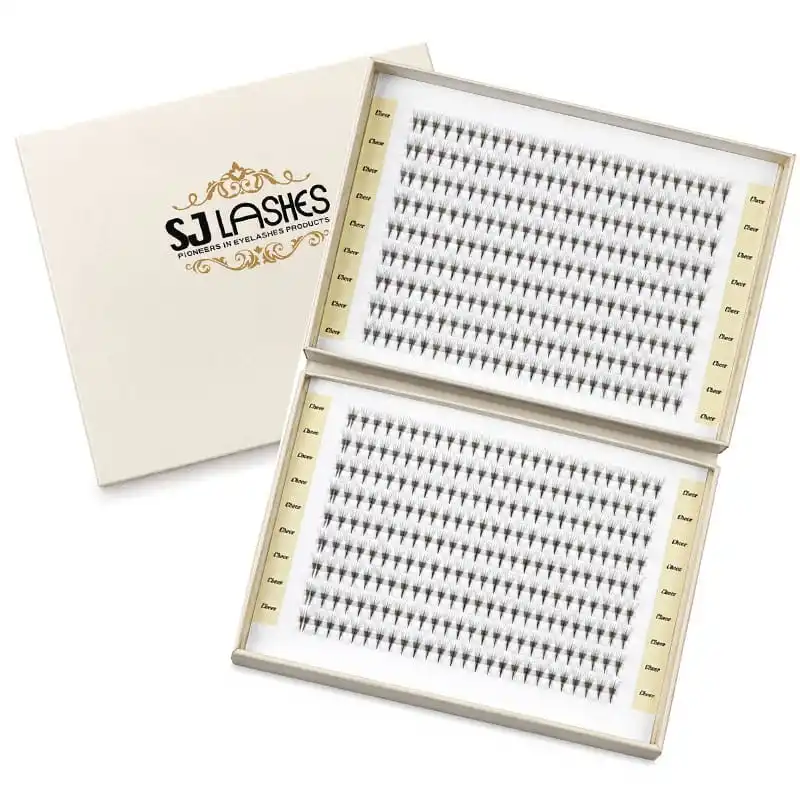
Two Halves, Two Trays — the Lid Does Real Work
Quick answer
| Aspect | What it means in a bifold box |
|---|---|
| Defining feature | Both the lid and the base are fitted trays that hold product |
| It replaces | A box where half the volume is an empty lid |
| Gains | Roughly double the usable display area at the same footprint |
| Costs | A loaded lid needs a real hinge, not a fold |
| Best for | Sets, professional kits, bulk trays and gift boxes |
| Watch for | Hinge fatigue, lid sag, and product escaping a lid tray when open |
What "bifold" means here
The word covers two constructions, and they behave differently.
The centre-fold spread. The box opens out flat like a book, revealing panels on both inner faces side by side. There is no separate lid to set down — the box becomes a single wide display surface. This is the format in the purple, pink and marble finishes below: two printed panels, each headed for professional cluster lashes, with rows of clusters running the full width.
The clamshell with hardware. The box opens like a case, the lid staying attached along one long edge. Both the lid interior and the base interior are fitted — in the black and gold version, a red velvet lid insert above and a gold base insert below, each holding a pair under a clear cover.
Choose by what the customer does next. If she needs to compare and choose from a large spread, take the centre-fold, because the flat spread is the point. If she is receiving one finished pair as a gift or a retail item, take the clamshell, because the two fitted halves read as a presentation.
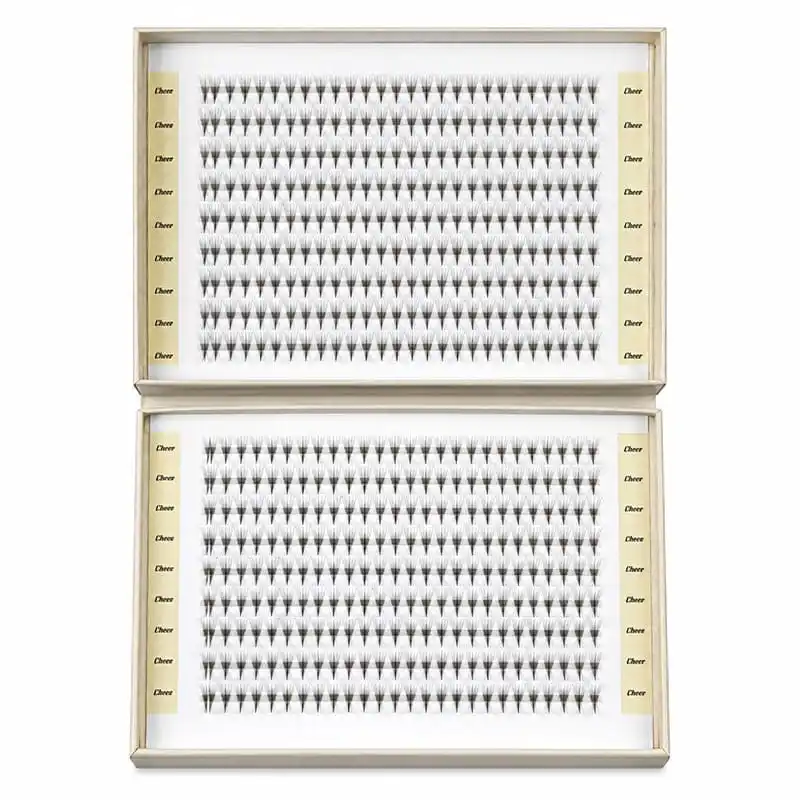
Laid Out Flat — the Whole Range in One View
Construction 1: the centre-fold spread
The centre-fold version opens into a single wide surface with a printed lash panel on each inner face. Because both faces are visible at once, it works as a working tray rather than a box: a professional can lay it flat on a station and pick from the full range without moving anything.
Four things to specify.
- Panel print. Each inner face is a flat printed panel — the heading, the row layout and the brand mark all go there. In the marble and pink versions the panel carries the brand as well as the product heading, which means the box is branded twice: once on the outside for the shelf, once on the inside for the customer.
- Row capacity. This is the box's whole promise, so the row count, the cluster spacing and the panel size are one specification. Decide the capacity first and size the box around it, not the reverse.
- The fold itself. A centre-fold is a live hinge that opens to 180 degrees. It needs a scored, reinforced spine, because the fold is a moving part and will be worked more than any other edge on the box.
- The closure. With no separate lid, the box has to hold itself shut. A magnetic flap or a wrap closure keeps the two halves closed; without one, a centre-fold box will not stay shut in transit.
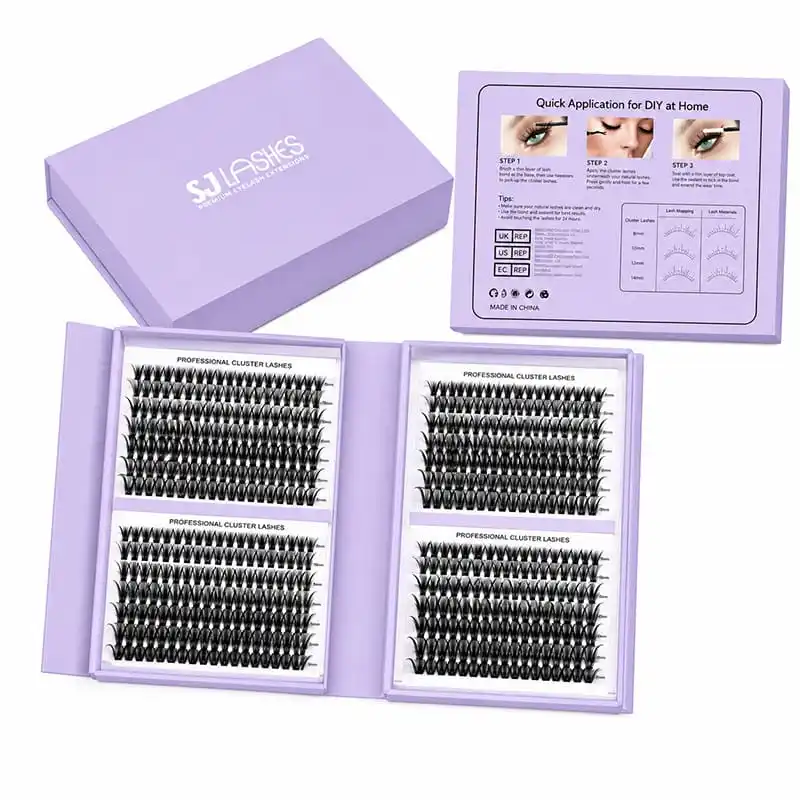
The Box Becomes the Display
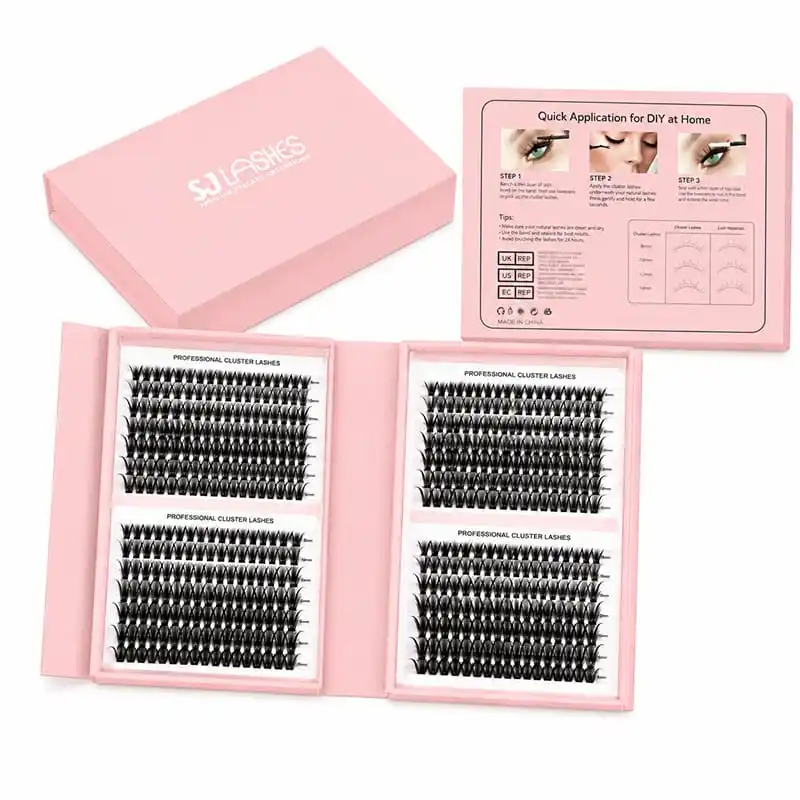
Pink, Printed Inside and Out
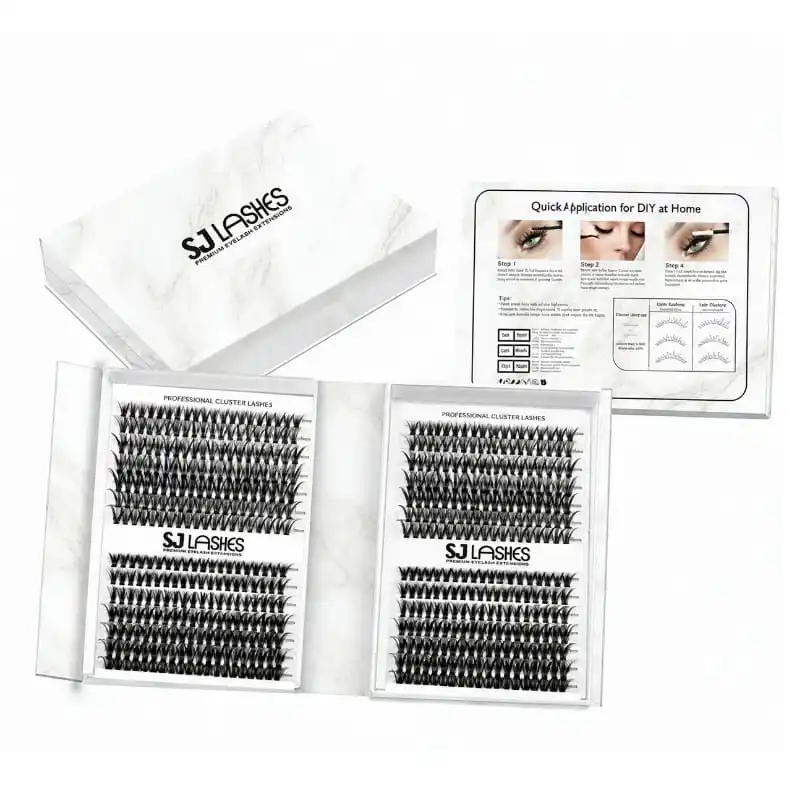
One Construction, Printed to Suit the Finish
Construction 2: the clamshell with hardware
The clamshell version is the same idea at a higher price point, and it is where the engineering becomes visible.
In the black and white versions below, the box opens like a case. The lid stays attached along one long edge. Both interiors are fitted: a red velvet insert in the lid holding a pair under a clear cover, and a gold insert in the base holding a second pair under its own cover. Opening the box presents two pairs at once, at two depths, in two materials.
Everything that makes it work is hardware.
Gold corner protectors. Not decoration. A box whose lid carries product gets picked up by its corners, and those corners take the entire weight of a loaded, open lid. Metal protectors distribute that load and stop the corner from crushing over time.
Metal hinges. A paper fold is fine for an empty lid. A lid carrying a fitted insert and a covered pair is a different load case, and it needs a hinge with a barrel and a pin rather than a crease. This is the single most common place a bifold design fails.
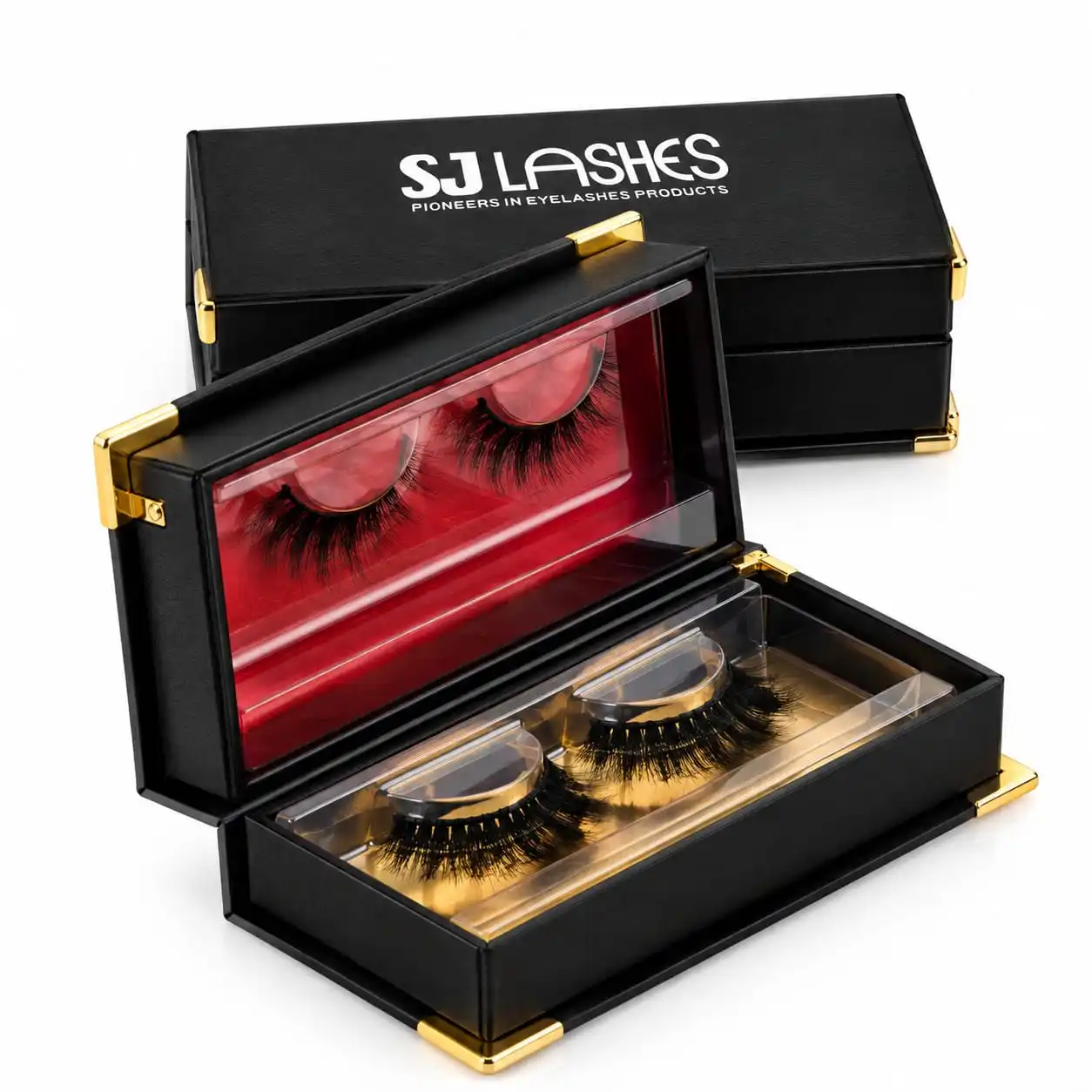
Hardware, Not Decoration — Corners and Hinges Doing Work
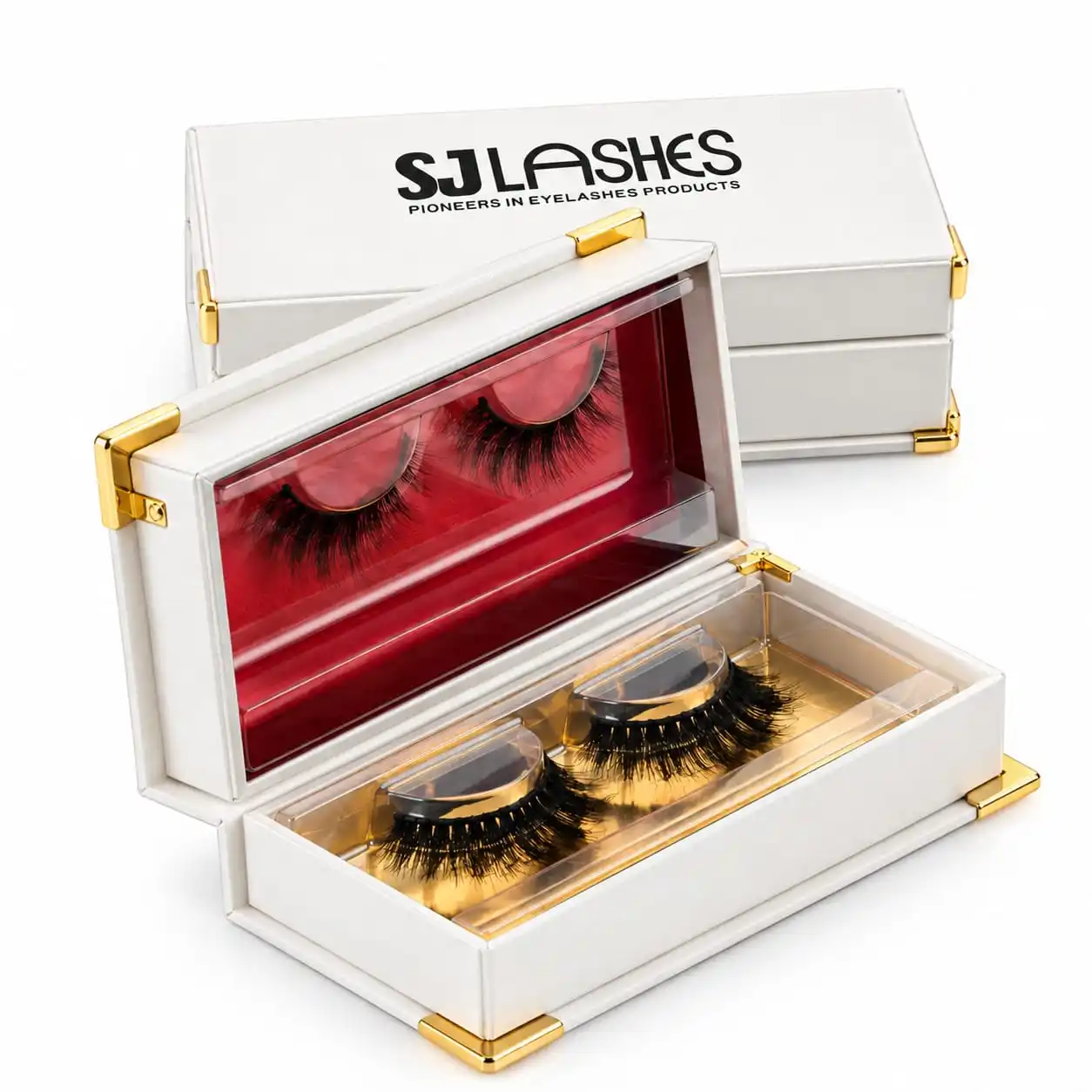
One Construction, Two Exteriors
The hinge is the design
If you take one thing from this article, take this.
In an ordinary box, the hinge is a crease. In a bifold box with a loaded lid, the hinge is a component. The lid's weight is not the lid's problem — it is the hinge's problem, and it becomes the customer's problem roughly three months into ownership, when the lid no longer sits square and the box no longer closes cleanly.
So the load path has to be designed, not assumed. There are three questions, and they have to be answered together:
- What does the lid carry, in grams? An empty lid and a lid holding a fitted insert, a clear cover and a lash pair are not the same lid. Get the number before choosing the hinge.
- How does that load reach the hinge? Through the board, or through hardware? Corner protectors and a barrel hinge move the load into metal, which is why they appear on the versions that carry product in both halves.
- How many times will it open? A retail box is opened a handful of times on a shelf. A gift box is opened and closed repeatedly by its owner, and a professional tray is opened at every appointment. The same construction is being asked for very different service lives.
Then test it as a hinge rather than as a box: fill both halves, open and close twenty times, and check that the lid still sits square and the closures still meet. If it does not pass at twenty, it will not pass at two hundred.
The separate card: display, manual and compliance surface
All three centre-fold versions ship with a printed card, and its contents are the reason the format works commercially.
The card carries three things the box itself cannot easily carry:
- The application instructions. Headed, in this case, for quick application at home, in three numbered steps with a photograph each — the technique written where the customer will actually read it, rather than folded inside or printed too small to follow.
- The lash map reference. A table pairing cluster type with lash mapping and lash material, with small mapping diagrams. This is the part that turns a box of clusters into a system the customer can repeat.
- The regulatory block. Responsible-person contact boxes for the markets the product is sold into, an origin mark, and the icon row.
The commercial argument for putting the regulatory block on the card rather than on the box is worth stating plainly, because it is easy to miss and expensive to correct.
A card is a separate print run. A box is not. Market-specific contact details, translated warnings and local origin requirements change by country. If they live on the box, every new market means a new box run, with its own tooling setup and its own minimum quantity. If they live on a card, the box stays the same and only the card changes — the artwork is smaller, the minimum is lower, and the change can be made market by market without touching the structure.
For a brand selling into several countries from one product line, that difference is the whole argument. Put the parts that change by market on the part that is cheapest to reprint.
Tray engineering for a lid that holds product
A tray in the base has gravity on its side. A tray in the lid does not — and that single fact generates most of the practical problems in this format.
Retention against gravity. When the lid is open and standing at an angle, everything in the lid tray is being asked to stay put while facing sideways. A shaped recess alone is rarely enough for a lash cluster. The versions here solve it with a clear cover over each fitted insert, which retains the product, keeps fibres off handling surfaces, and lets the customer see what she is choosing. If a clear cover is not appropriate, the recess has to be cut deeper with a retaining lip, and that eats into the lid's depth budget.
Balance. A lid-heavy box tips backwards when open. If the customer has to hold it open with one hand while picking with the other, the design has failed regardless of how it looks. The fix is usually in the base — a slightly heavier base insert, or a base that is deeper than the lid — and it has to be settled before the structure is cut, not after.
Depth budget. Lid tray depth plus base tray depth plus the closure gap equals the box's total thickness. Every millimetre added to the lid tray to hold product more securely is a millimetre added to the box, and that shows up in shipping volume. Decide the retention method first, then let the tray depths follow.
Alignment. On a centre-fold box, the two panels meet when closed. Row grids that do not line up across the fold read as a mistake every single time the box is opened. Size the two panels as one layout divided in two, not as two panels designed separately.
One construction, many finishes
The same structure is offered across a wide range of exteriors, and it is worth noting how much of the range is print rather than construction:
- Cream, with the brand and a gold flourish on the lid — the professional and bulk direction, with dense cluster trays and repeat style labels down the tray edges.
- Purple, pink and marble-effect — the centre-fold spread in three finishes, each with its own printed inner panels.
- Black and white with gold hardware and red velvet inserts — the premium direction, where the structure itself is the sell.
This matters for a brand planning a range rather than a product. Changing the finish does not mean changing the tooling: the same cut covers the whole family, so a new colourway is a print decision. That is the same logic as the bifold itself — spend the engineering once, and let the customer-facing layer be the part that varies.
Supplier scorecard and sampling
What to ask
- Is the lid a fold or a hinged component, and what load is it rated for?
- If the lid carries a tray, how is product retained when the lid is open and standing?
- Are corner protectors available, and what do they add to the weight and the cost?
- On a centre-fold, how is the spine reinforced, and to how many open-and-close cycles is it tested?
- How many rows can each panel hold at our cluster spacing, and does that change the box size?
- Can the card be printed and packed separately from the box, and what is its own minimum?
- Is the box available in the finish we want without changing the structure?
What to check on a sample
- Load the lid, then open it. Fill both halves. Open the lid to its standing angle and confirm nothing in the lid tray moves.
- Twenty cycles. Open and close twenty times, loaded. Check the lid still sits square and the closures still meet.
- Balance test. Put the open box on a flat surface and let go. It should stand, not tip.
- Fold alignment. Close the box and check the two panels meet cleanly and the row grids line up across the fold.
- Card fit. Confirm the card sits in its position without moving, and does not interfere with the lid closing.
- Weight in hand. Weigh a fully loaded box. A bifold carries product in both halves, so it is heavier than an equivalent single-tray box — check that against your shipping maths before the second run, not after.
Quote checklist
- Target market, channel and price point.
- Centre-fold spread, or clamshell with hardware.
- Box size, board grade and thickness.
- Exterior finish and colourway.
- Lid hardware — corner protectors and hinges, specified or not.
- Tray configuration for both halves, including depth and retention method.
- Clear covers, if used — material and thickness.
- Insert material and colour for each half.
- Panel print and row layout, with cluster spacing.
- Row capacity and cluster count.
- Card contents — instructions, mapping table, regulatory block — and its own print specification.
- Brand artwork and colour reference for both the outside and the inner panels.
- Sampling quantity and lead time.
- Packing method for the loaded box.
👉Request free samples of our bifold lash gift boxes
Compliance and honest claims
- Put the parts that change by market on the part that is cheapest to reprint. Responsible-person contacts, local-language warnings and origin marks differ by country. On a card, they can be changed market by market. Printed into the box, they lock the structure to one market.
- Check the placement instruction across your own materials. The cards in this range and the cards supplied with our other DIY lash products do not currently give identical placement wording — one describes placing clusters underneath the natural lashes, another reads as a distance above the lash line. Both may be describing the same technique, but a customer holding two of your products will not know that. Align the wording across the range, or state clearly which technique each product uses.
- Make the mapping table match what ships. A table listing cluster types, mappings and materials is a product claim. If a material changes, the table changes with it.
- Count the non-paper components before making a recyclability claim. A bifold box with a loaded lid typically contains clear covers, a fitted insert and metal hardware. The board may be recyclable; the assembly is a different question. Say which part the claim applies to.
- Confirm what the velvet insert actually is. If a claim is attached to it, it needs to be accurate, and it needs to be consistent with the material actually used.
Why SJ LASHES
A bifold box is a structural job before it is a printing job, and most of the failure modes are invisible until the customer has owned the box for a few months. The parts that matter:
- We build the structure and the trays together. Both halves of a bifold are fitted components, and the tray depths, the retention method and the closure gap have to be settled as one specification. We cut, fit and assemble them as one unit rather than sourcing the box and the insert separately.
- We make the hardware available rather than optional-after-the-fact. Corner protectors and barrel hinges are specified at the structure stage when the lid carries product, because retrofitting them changes the cut.
- We print the card as its own part. Instructions, mapping tables and market-specific regulatory blocks can be produced and revised independently of the box, so a new market does not mean a new box run.
- We make the inner panels part of the artwork. On a centre-fold, the inside is the display, so the inner print is designed with the same care as the front.
- Low minimums and fast sampling. Structure changes are cheapest before the first cut, so we would rather test a fold, a hinge and a tray depth at sample stage than discover the problem in production.
👉Talk to us about your bifold gift box · See packaging options
Frequently asked questions
What makes a bifold box different from a normal gift box? The lid holds product. In a standard box the lid is a cover and half the volume is empty when open; in a bifold, both the lid and the base are fitted trays, so opening the box presents the range in two directions at once.
Does a lid tray need a different hinge? Often, yes. Empty lids can work on a paper fold, but a lid carrying a fitted insert, a clear cover and product is a load case that a crease is not designed for. That is why the premium versions use corner protectors and metal hinges.
Will the product fall out when the lid is open? Not if retention is designed in. A tray in a lid faces sideways when open, so shaped recesses alone are often not enough for lash clusters. A clear cover over the insert retains the product and keeps fibres off handling surfaces.
Which construction should a new brand start with? The centre-fold spread with a card, in most cases. It gives the customer the widest view of the range, it needs no separate lid to set down, and it carries its instructions and mapping on a card that can be changed without touching the box. Move to the clamshell with hardware when the box itself is part of the value being sold.
Can the box be produced in different finishes without new tooling? Yes — the same structure can carry a range of exteriors, which makes a new colourway a print decision rather than a structural one. Confirm this with your supplier before finalising artwork, because it depends on board thickness staying within the same band.
Why put the regulatory block on the card instead of the box? Because the card is a separate, cheaper print run. Market-specific contacts, warnings and origin marks change by country; on a card they can be changed per market without a new box run.
Can the inner panels be printed? Yes, and on a centre-fold they should be — the inside is the display surface. Both inner faces can carry a heading, a brand mark and a row layout.
How should we test a bifold sample? Fill both halves, open and close twenty times, confirm the lid still sits square and the closures still meet, put the open box on a flat surface and check it stands rather than tips, then close it and check the panels meet and the row grids line up across the fold.
The takeaway
A bifold box is not a box with a decorated lid. It is a box that has decided the lid should work.
That decision buys you a second tray, a wider presentation and roughly double the display area at the same footprint. It also moves the load into the hinge and turns the closure into a structural question — which is why the versions that carry product in both halves end up using metal, and why the ones that do not are usually the ones that sag.
So the sequence is: decide what the lid carries, get the load to the hinge, choose the retention method, and only then design the print. Do it in that order and the bifold is the most generous format in a lash range. Do it in the other order, and you will find out from a customer three months later.
👉Related reading: the three most popular lash box types · our guide to the single-pair lash gift box