EN
EN
Self-Adhesive Segmented Lash Packaging for the Italian Market: An EU Market-Entry Guide
Self-adhesive segmented lashes are one of the fastest-moving lash formats in Europe right now — no glue bottle, no drying time, no mess, which is exactly what the European consumer has been asking for. But the format creates a packaging problem that most brands underestimate: a box that holds nothing but lash clusters has to carry your entire brand, your entire product information and your entire legal compliance, on its own.
This guide is written for European brands, importers and distributors specifying self-adhesive segmented lash packaging — with the Italian market specifically in mind. It covers the box itself, and then the layer most suppliers never mention: what the EU and Italian markets require you to print on it, and by when packaging rules will change.
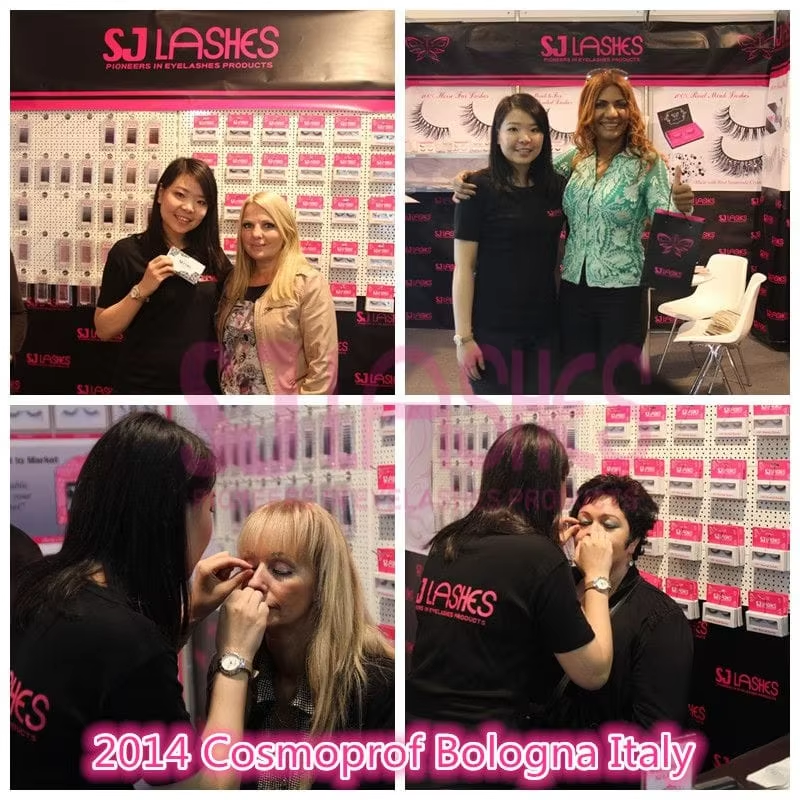
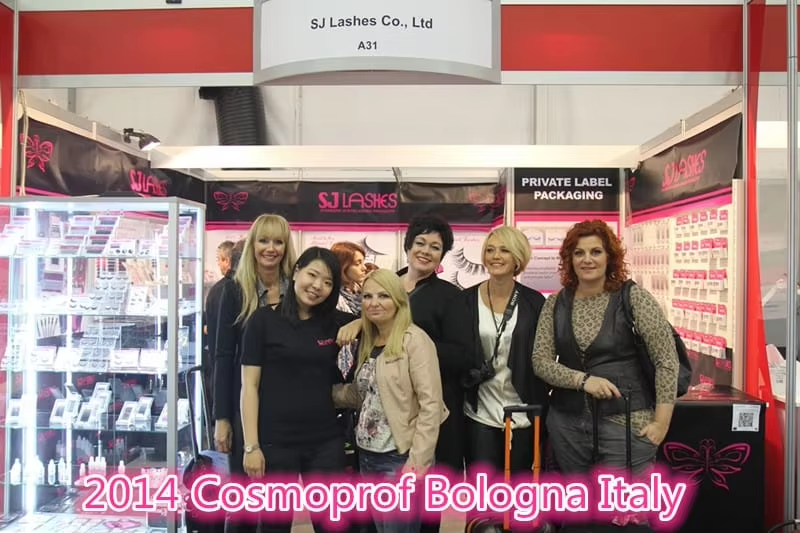
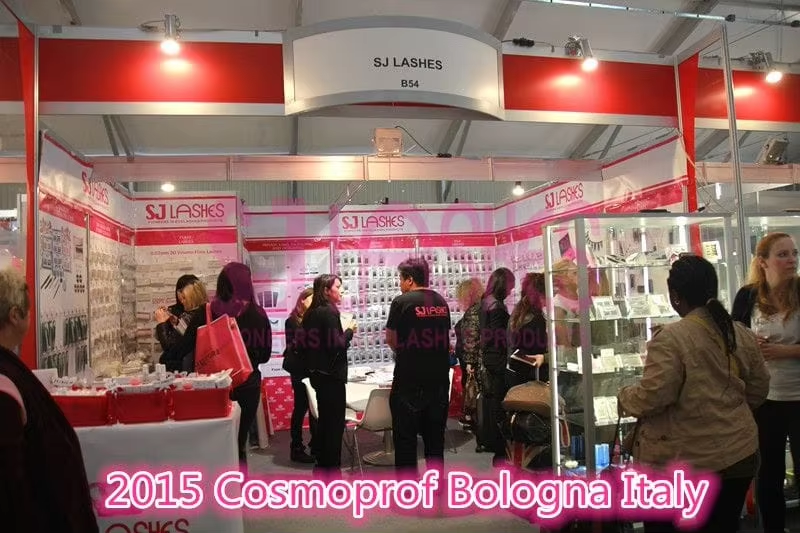
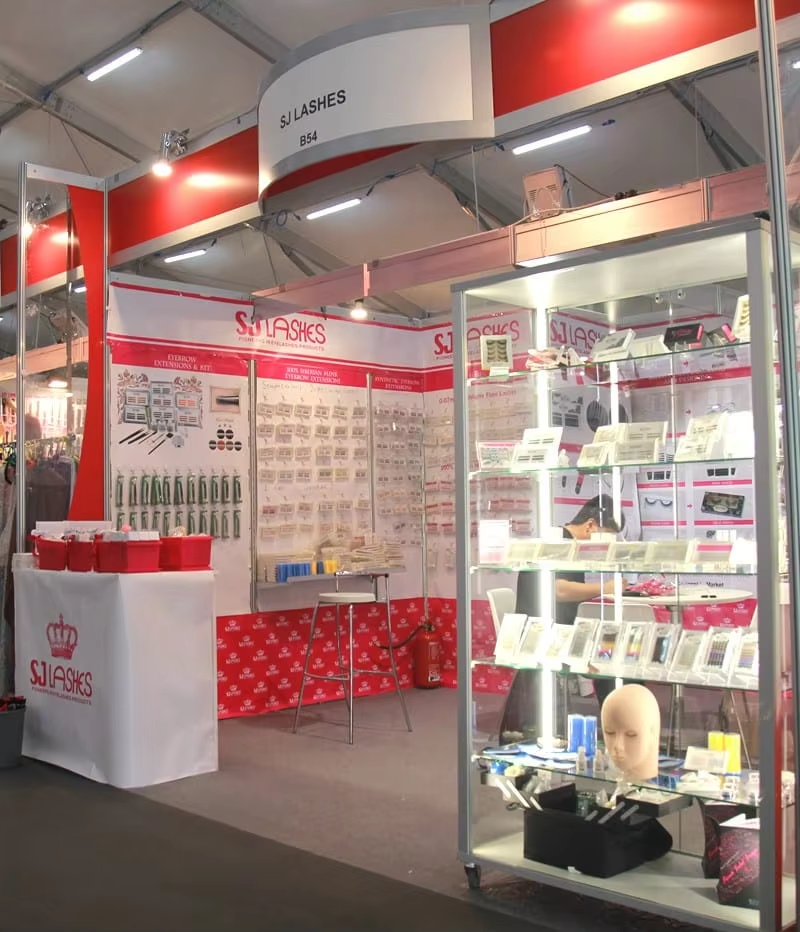
SJ LASHES is a lash and lash-packaging manufacturer that has been building for European buyers for over a decade; the archive photographs on this page are from the Cosmoprof Worldwide Bologna editions we exhibited at in 2014 and 2015.
👉Send us your self-adhesive lash packaging requirement for a free sample and quote
Quick answer
A self-adhesive segmented lash box is a windowed paper box containing several rows of glue-free lash clusters fixed in a moulded or adhesive tray, with a printed back panel carrying product information. For the Italian and EU market, three things decide whether it sells: how clearly the clusters read through the window, how firmly the tray holds each segment in transit, and whether the printed panel carries everything EU and Italian labelling rules require — in Italian.
What Cosmoprof Bologna taught us about European buyers
Cosmoprof Worldwide Bologna is Europe's largest beauty trade fair, held at BolognaFiere in the Emilia-Romagna region — the same region that hosts much of Italy's beauty manufacturing. SJ LASHES exhibited there in 2014 (booth A31) and in 2015 (booth B54), and the photographs below are from those editions.
Look at what the archive photos actually show. In the first two, a buyer is holding a box up to the light and an application demo is running at the booth. In the third and fourth, the display walls are packed with lash trays, extension kits and a glass case of samples, under a sign that reads Private Label Packaging. What stands out across all of these pictures is simple, and it is the thing that still shapes how we build packaging for European buyers today:
European buyers do not approve a lash box from a PDF. They approve it by hand.
That is a purchasing behaviour, not a preference, and it has three consequences for how a self-adhesive lash box should be engineered:
- The window has to survive physical inspection. Not just look clean in a photograph — the film must sit flat, stay clear, and let the buyer see the individual segments without tinting or distortion.
- The tray has to hold its shape when the box is tipped. A buyer will turn the sample over. If the clusters shift and pile at one end, the sample has already failed.
- The finishing has to hold up to a thumb. Foil that scratches, lamination that lifts at the edge, a window film that flexes — all of these are visible in the hand long before they show up in a photo.
What is a self-adhesive segmented lash box?
The product inside is a set of glue-free lash clusters — short segments applied under the natural lash line in a few minutes without adhesive, using a press-on self-adhesive band. The box is what makes the format work commercially, and it has to do four jobs at once:
- Display the clusters so a shopper can judge length, curl and density without opening it.
- Protect soft, easily distorted segments through shipping, warehousing and retail handling.
- Organise the set so rows stay separated and the customer can find a length mid-application.
- Inform — carrying the branding, usage directions and mandatory product information, because there is often no secondary carton and no leaflet.
That last point is what separates a self-adhesive lash box from ordinary lash packaging. With strip lashes, the box is usually the first layer of several. With a glue-free segmented set, the box frequently is the packaging — which means the back panel is not decoration, it is your compliance surface.
Box anatomy: seven elements that decide the result
1. Box structure and board weight
Folding cartons in 250gsm, 300gsm or 350gsm coated art paper cover most retail needs. If the set is positioned as a gift or premium SKU, a rigid box at 1.5mm, 1.8mm or 2.0mm board with a magnetic closure or lift-off lid changes the perceived value immediately.
2. The tray — moulded or adhesive
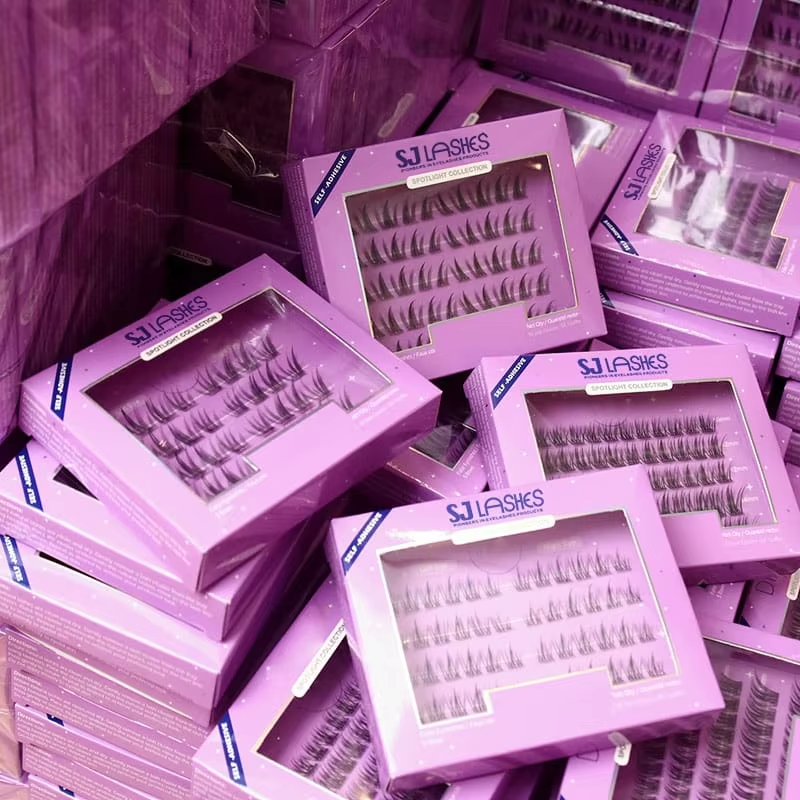
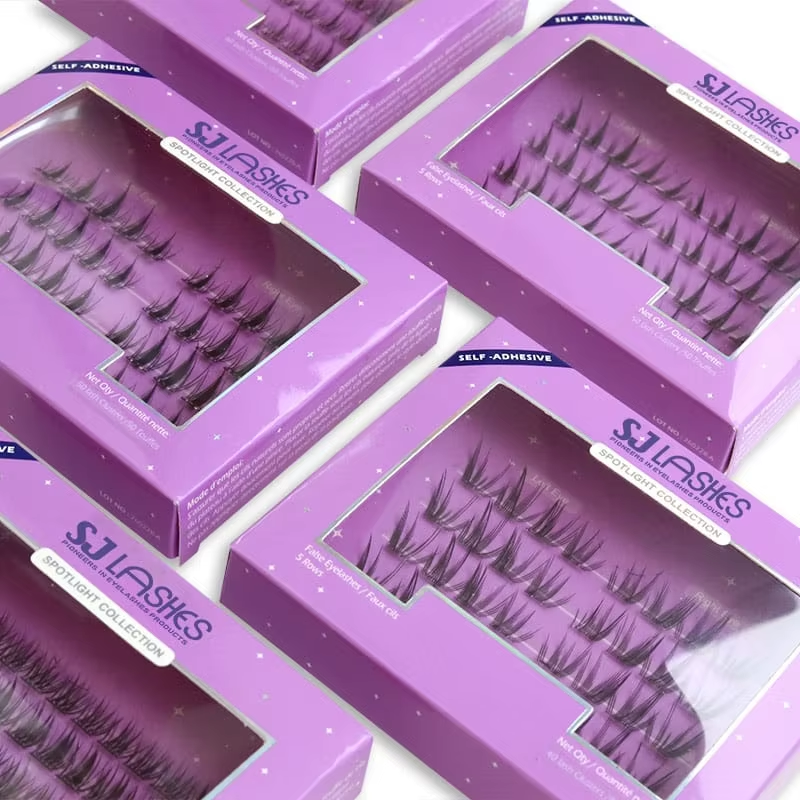
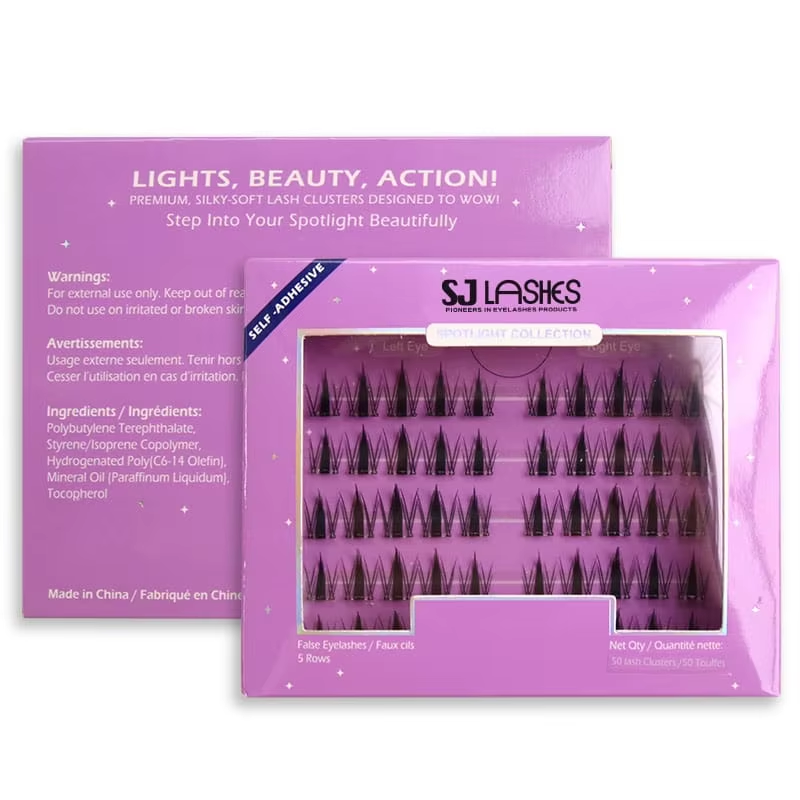
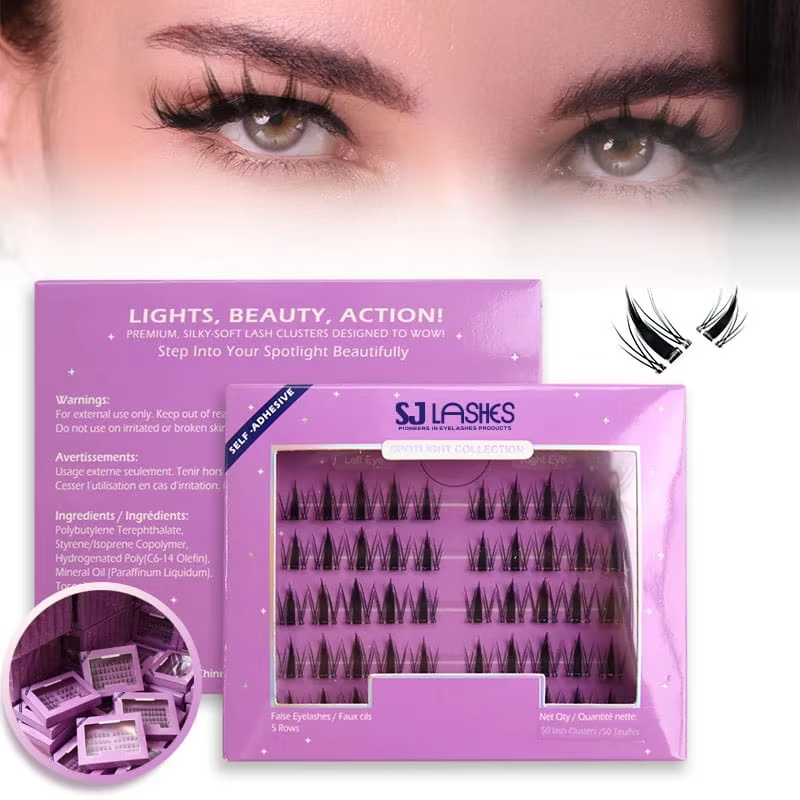
The photographed design uses a self-adhesive fixing that keeps each row of clusters anchored in a mouldable tray, so nothing moves or gets damaged in transit. This is the single most important functional decision in the whole box: a tray that grips without denting the lash band. It is also the element most cheaply compromised by suppliers who have never shipped a real container load.
3. The window
Window shape is fully customisable — rectangle, oval, heart, teardrop. Clear PVC film is typically specified between 10 mil and 14 mil; the heavier end resists flexing and denting, the lighter end looks more delicate. The window opening should be sized so the customer sees exactly what you want her to see: the full set, or a single row and its band detail.
4. Interior layout flexibility
The interior is not fixed. Cluster count and row count are customisable — a 5-row / 50-cluster set and a 10-row / 120-cluster set are the same engineering exercise at different scales. The adjustable interior also lets you align mixed lash lengths in sequence, for example 8mm through 16mm, so a customer can build a look without hunting through the set.
5. Foil stamping and the corner banner
Hot foil stamping in gold, silver or rose gold is what gives the format its premium read, and a corner banner printed with the format name — Self-Adhesive, as in the photographed design — does real merchandising work. It lets a shopper identify the format from across a shelf without reading the brand name.
6. Printing and finishing
CMYK four-colour printing handles complex artwork; Pantone spot colour holds your brand shade precisely and consistently across reorders. Spot UV creates a gloss-or-matte contrast in a localised area; debossing and embossing add three-dimensional texture to a logo. Gloss or matte lamination protects the print and improves water resistance. If your brand already has lash boxes, match the finish to them — a self-adhesive set that looks like a different brand on the same shelf is a merchandising loss.
7. The back panel
With no secondary carton, the back panel carries warnings, ingredient declarations, net quantity, country of origin, barcode and the responsible-person details. Its layout should be designed at the same time as the front, not squeezed in at pre-press. This is the element most often reworked after a first print run — and the most expensive to get wrong.
The layer most suppliers never mention: EU and Italian compliance
This section is the reason this guide exists. If you are importing lash products into Italy or selling them elsewhere in the EU, the printed box is a regulated surface, and the rules are different from the US, the UK or Asia. The photographed sample box carries English and French — which suits France, Belgium or Switzerland. For the Italian market, mandatory information must be in Italian.
Three things to check with your supplier before you print.
1. Cosmetic product labelling under Regulation (EC) No 1223/2009
Where a lash product falls within the EU Cosmetics Regulation, the label is expected to carry, at minimum:
- The name and address of the Responsible Person established in the EU.
- Country of origin (for products imported into the EU).
- Nominal content by weight or volume at the time of packaging.
- Date of minimum durability where applicable, or the period-after-opening symbol.
- Batch number or lot reference for identification.
- Function of the product, unless it is obvious from the presentation.
- The ingredient list in INCI nomenclature, preceded by the heading "Ingredients".
- Any required warnings and precautions.
Required information must appear in a language easily understood by the consumer — in practice, the official language of the Member State where the product is marketed. For Italy, that means Italian. The word "Ingredients" is the recognised exception and is conventionally left untranslated.
The design implication is not trivial: Italian runs meaningfully longer than English for the same content. A back panel laid out for English and French will often not hold the same information in Italian without a layout change. Decide the languages first, then engineer the panel.
2. Packaging and Packaging Waste Regulation (PPWR)
Separately from cosmetic rules, EU packaging rules are tightening. The PPWR sets the direction that all packaging placed on the EU market must be recyclable in an economically viable way by 2030, with design-for-recycling criteria and recyclability performance grades — packaging failing to meet the required grade is expected to be excluded from the market from 2030. Minimum recycled content requirements for certain packaging also phase in.
For a lash brand, the practical questions to ask now are:
- Can the window film be separated from the paperboard, and is that communicated?
- Is the paperboard FSC-certified or otherwise responsibly sourced?
- Is the tray plastic, and if so, which polymer, and how separable is it?
- Are you avoiding unnecessary multi-material laminates where a mono-material option exists?
Ask these at the design stage, because retrofitting recyclability into an existing dieline costs far more than building it in. Confirm current requirements and delegated acts with the official EU sources and your compliance adviser before committing to a dieline — the rules are still developing and dates matter.
3. Language and market expectations, beyond the legal minimum
Legal compliance is the floor, not the brief. Italian consumers and beauty distributors expect Italian usage instructions, and Italian professional channels — pharmacies, parfumerie, professional lash studios — read a box in Italian as a signal that the brand has actually committed to the market rather than simply shipped inventory into it. If your commercial plan includes Italy, Italian on the back panel is part of the product, not a printing extra.
Why packaging converts for this format
It replaces the glue bottle as the value signal
With strip lashes, the glue and applicator carry a lot of the perceived value. A glue-free segmented set removes them. What is left to justify the price is the box — which is why a well-engineered self-adhesive box can support a materially higher price point than the same clusters in a plain sleeve.
It reduces returns, which protects your margin
A large part of e-commerce returns in the DIY lash category comes down to the product arriving disorganised, with segments mixed or bent. A tray that fixes each row in place is not a cosmetic detail; it is a returns-control decision.
It photographs as a product, not as inventory
For TikTok Shop, Instagram and Amazon listings, the box is the hero image. A clear window over aligned rows, with foil catching the light, produces a listing image without needing styling props.
It carries the routine, so customers reorder
A back panel that explains how to apply, how many segments to use per eye and how long the set lasts reduces support questions and increases repeat purchase. The box becomes an instruction card and a brand asset at the same time.
How to specify your self-adhesive lash box
Work through these in order, and do not let artwork start before items 1 to 4 are settled:
- Positioning — mass retail, professional channel, gift SKU or DTC.
- Set composition — clusters per box, rows, and the length range and sequence.
- Tray type — moulded or adhesive fixing, and how firmly each segment must be held.
- Window — shape, size and film thickness, chosen to display what sells the set.
- Structure — folding carton or rigid box, with board weight matched to positioning.
- Finishing — foil colour, spot UV, embossing, lamination, matched to your existing range.
- Languages and panel content — decide these before layout, especially if Italian is included.
- Recyclability — materials and separability chosen for the 2030 direction, not against it.
- Compliance fields — responsible person, batch field, nominal content, INCI, warnings.
- Barcode and logistics — barcode placement, carton dimensions, case pack.
Supplier scorecard and sampling
What to ask a supplier
- Can you build a moulded or adhesive tray that holds segments firmly without denting the band?
- Which window film thicknesses do you offer, and can we test them?
- Can you print full panel content in Italian, and check the layout for text expansion?
- Can you produce foil, spot UV, emboss and lamination on the same box?
- Do you offer both folding cartons and rigid boxes so we can compare positioning?
- Can you advise on separating materials for recyclability?
- What is the lead time for a new dieline versus a reorder?
- How do you archive specifications so a reorder matches?
What to check on the sample
- Tilt and shake the box: do the clusters stay in their rows?
- Look through the window at an angle: is the film flat and colour-neutral?
- Run a thumb across the foil and the lamination edge.
- Hold the front panel at arm's length: does the format banner read?
- Read the back panel under a lamp: is the ingredient text legible at final size?
- Compare it side by side with your existing lash box under the same light.
A supplier who ships a real sample fast is useful. A supplier who ships a sample and a written specification is the one you can reorder from for two years without surprises.
Channel notes for the Italian and European market
E-commerce and marketplace. The listing image is the box. Price the set against the packaging quality you can see in the photograph, because that is what the customer is comparing.
Professional channels — pharmacies, parfumerie, lash studios. These buyers read Italian. Legible Italian instructions and a clean, clinical-but-premium finish matter more than novelty window shapes.
Distributors and importers. Prepare a specification sheet per SKU: dimensions, board, tray, window film, finishing, languages on panel, compliance fields, barcode, case pack, shelf life and lead time. Distributors filter suppliers on documentation long before they discuss price.
Gift and seasonal SKUs. Rigid box construction, satin ribbon and matched foil turn a regular set into a gift SKU without changing the product inside.
OEM / private label workflow
- Brief — market, channel, positioning and target retail price.
- Set design — clusters, rows, lengths and sequence.
- Dieline and tray engineering — structure, tray, window and panel layout developed together.
- Content and compliance — languages, INCI, responsible person, batch field and required symbols.
- Artwork and finishing — foil, spot UV, emboss and lamination applied to the approved dieline.
- Physical sample and approval — tested in the hand, tilted, inspected through the window.
- Production and reorder — locked specifications, archived for consistent reorders.
Quote request checklist
Include these when you contact us:
- Target country and sales channel (Italy, or which EU market).
- Positioning: mass retail, professional, gift or DTC.
- Clusters per box, number of rows, length range and sequence.
- Tray preference and how firmly segments must be held.
- Window shape, size and film thickness.
- Box structure and board weight.
- Finishing: foil colour, spot UV, emboss, lamination.
- Languages required on the panel — and whether Italian is one of them.
- Compliance fields and any documentation you need.
- Quantities for sampling and first order.
- Delivery window and destination.
👉Request a free sample and quote for your self-adhesive lash packaging
Compliance and honest claims
A few things we will not do, and we would advise you not to do either:
- We do not claim a wear duration, a hold strength or a "no glue needed forever" result unless the final product documentation supports it for your market.
- We do not convert a statement printed on a sample box into a verified product claim. Sample artwork is artwork; claims need documentation.
- We do not offer "hypoallergenic", "medical grade" or "safe for sensitive eyes" as label copy without substantiation and market clearance.
- We always recommend a patch test reference on the panel where appropriate, and clear guidance to stop use and seek professional advice if irritation occurs.
Label requirements differ between Italy, other EU Member States, the UK and the US. Confirm the final content for your specific market with your compliance adviser before the print run. Getting this right is not only safer — it is what lets a distributor place a repeat order with confidence.
Why SJ LASHES
- A manufacturer, and a packaging developer. Lashes, trays, boxes and finishing under one roof, so the tray is engineered around the clusters rather than sourced around them.
- Real European trade-show history. We exhibited at Cosmoprof Worldwide Bologna in 2014 and 2015; our archive on this page documents both editions.
- Self-adhesive and glue-free expertise. Self-adhesive segmented sets, pre-glued press-on kits, 5-row and 10-row formats, upper and lower clusters.
- Low MOQ for a first launch, with the flexibility to test a format before committing to volume.
- Language-aware artwork. We lay out panels for the language set you actually sell in, including Italian.
- Recyclability-aware engineering — window, tray and board selected with the EU's 2030 direction in mind.
- Locked specifications for consistent reorders, with samples and written specs held on file.
Explore the cluster lashes paper boxes range, cluster lash kit boxes, the self-adhesive eyelashes category and the pre-glued DIY lash kit (press-on system) formats, or review our full custom packaging service.
FAQ
What is a self-adhesive segmented lash box?
A windowed paper box holding several rows of glue-free lash clusters fixed in a moulded or adhesive tray, with a printed panel carrying branding, usage directions and mandatory product information. It is the primary packaging for the set — often the only one.
Why does the tray matter so much?
Because it is what protects the clusters in transit and what stops the set arriving disorganised. A tray that holds each row firmly without denting the lash band reduces damage, returns and complaints — and it is the first thing a buyer tests by tilting the sample.
Can the box be customised for different set sizes?
Yes. Cluster count and row count are fully customisable — a 5-row / 50-cluster set and a 10-row / 120-cluster set are the same engineering approach at different scales. The interior can also be arranged to sequence mixed lengths, for example 8mm to 16mm.
What has to be printed on the back panel for the EU?
Where the EU Cosmetics Regulation applies, expect to include the EU Responsible Person's name and address, country of origin, nominal content, date of minimum durability or period-after-opening, batch number, product function, the INCI ingredient list preceded by "Ingredients", and any required warnings — in a language the consumer understands, which for Italy means Italian.
Why can't I just use an English and French label in Italy?
Because the requirement is comprehension in the market where the product is sold, and Italy's language is Italian. English and French artwork suits France, Belgium or Switzerland. Italian also runs longer than English, so the panel usually needs re-laying out rather than simply retranslating.
Does EU packaging law affect my lash box?
It increasingly does. The EU Packaging and Packaging Waste Regulation sets the direction that all packaging on the EU market must be recyclable in an economically viable way by 2030, with design-for-recycling criteria and performance grades. Window film separability, board sourcing and tray material are all worth deciding at design stage.
What is the minimum order for a custom self-adhesive lash box?
It depends on structure, finishing and set composition — rigid boxes and multi-element finishing carry different minimums from a standard folding carton. Share your specification and target quantity and we will confirm what is achievable for a first launch.
Can you match the box to my existing lash range?
Yes, and you should ask for it. Matching the foil tone, lamination and overall finish to your existing lash boxes is what makes the self-adhesive set read as the same brand on the same shelf rather than a separate product line.
Final thought
A self-adhesive segmented lash set removes the glue bottle, the applicator and the drying time. Everything that remains to communicate value — the format, the lengths, the directions, the compliance, the brand — lands on one printed box.
Get the tray right and the window right, decide your languages before your artwork, and design for the packaging rules that are already coming. That is what turns a good format into a product an Italian distributor will reorder.
Request a free sample and quote from SJ LASHES
For more packaging development, factory footage and application education, follow SJ LASHES on Instagram and read the SJ LASHES blog.